
What You Need to Know About NST Testing
The NST test is a routine test to understand whether the baby is growing healthily in the womb. Experts recommend this test to assess the baby’s heart rhythm and movements. NST, which is applied in different months of pregnancy, is critical in terms of monitoring the health of the baby, especially in risky pregnancies. In this article, we will examine in detail the importance of NST, its application methods and its place in the pregnancy process, so that expectant mothers can have comprehensive information about this test.
What is NST (Nonstress Test)?
The NST test is a screening test used to monitor the health of babies during pregnancy. The term “nonstress” comes from the fact that the test does not put any stress on the mother and baby; In other words, the mother or baby is not exposed to any stress factors during the test. This test, especially by monitoring the baby’s movements and heart rate, shows whether the baby is getting enough oxygen and is healthy. The test is usually performed using a fetal monitor and can take about 20 to 30 minutes. 1
The NST test records how the baby’s heart rhythm changes with the baby’s movements. When the baby moves, the heart rate is expected to increase; This condition is considered a sign of a healthy nervous system. During the test, the baby’s heartbeat and movements are recorded in detail through sensors placed in the mother’s abdomen. 2nd
This simple and painless procedure is recommended for expectant mothers with conditions such as high blood pressure or diabetes, especially in at-risk pregnancies. There is broad consensus on the safety and efficacy of the test, and in many cases, NST can provide important information about the baby’s condition in the womb.

Why is NST Made?
The main purpose of performing the NST test is to monitor the health of the baby. Especially in high-risk pregnancies, this test provides important information to doctors. The main reasons for NST are as follows:
- Monitoring of Risky Pregnancies: NST is routinely recommended for expectant mothers who have chronic diseases such as diabetes, high blood pressure, or who have experienced complications in previous pregnancies to monitor the health of the baby.
- Decreased Movements of the Baby: When the expectant mother notices a decrease in the baby’s movements, NST is performed to assess the baby’s health status.
- Prolongation of Gestational Period: If the carrying time exceeds 40 weeks, NST may be applied to assess the baby’s well-being.
- Amniotic Fluid Abnormalities: In case of detection of abnormalities, such as a little or a lot of amniotic fluid, NST is used to monitor the baby’s condition.
- Twin or Multiple Pregnancies: In pregnancies with twins or more babies, NST can be performed to monitor the healthy development of each baby.
- Monitoring Placental Problems: When there is any problem with the placenta or in cases where placental insufficiency is suspected, NST is used to check if the baby is getting enough oxygen and nutrients.
- Age of the expectant mother: NST is recommended more frequently because the risk increases in expectant mothers aged 35 and over.
In addition to the above-mentioned conditions, the NST test may also be recommended by your doctor in case of any concerns about the health of the mother or baby. NST provides important and up-to-date information about the baby’s current condition, allowing for early detection of any potential problems. Thanks to this early diagnosis, timely intervention can be made if necessary and the most appropriate treatment plans can be applied for the baby’s health.
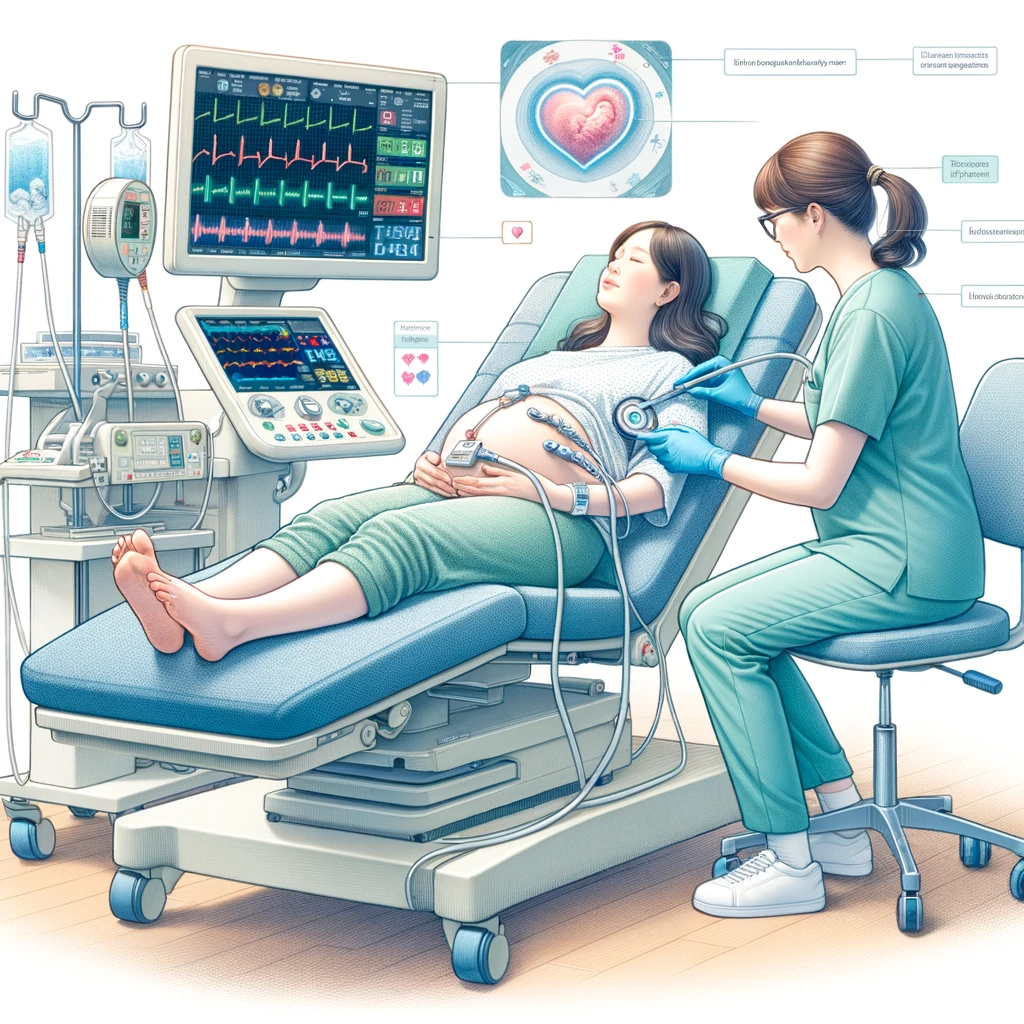
How is NST Test Performed?
The NST test is a procedure performed to monitor the health of the baby in the later stages of pregnancy. Here are the steps to implement this test:
- Preparatory Stage: When the expectant mother arrives at the hospital or doctor’s office for testing, she is usually seated on a bed or in a comfortable chair in a supine position. Pillows and supports can be provided for him to take a comfortable position.
- Setting Up the Monitor: One or two sensors are placed in the expectant mother’s abdomen to record fetal heart rate and movements. These sensors are connected to an ultrasound device.
- Testing Process: During the test, the expectant mother is told to press a button when she feels the baby’s movements. This helps determine the relationship between the baby’s movements and heart rate.
- Tracking: In this test, which usually lasts between 20 and 40 minutes, increases in the baby’s heart rate and movements are carefully monitored.
- Evaluation of Results: When the baby moves, it is checked whether the heart rate increases significantly. This reaction is an indication that the baby is healthy and getting enough oxygen.
It is important for the expectant mother to be comfortable during the NST test in order for the test to give accurate results. In some cases, simple directions such as drinking water or turning to the side can be given to the expectant mother to encourage the baby to move. It is worth noting that the NST test is painless and harmless; Therefore, it does not create any discomfort for expectant mothers.
How are the results of the NST test evaluated?
The results of the NST (Nonstress Test) test give important information about the baby’s health. The evaluation process involves analyzing the baby’s heart rate and movements according to certain criteria. Here are the stages of this evaluation process:
- Reagent Test Results: When an NST result is assessed as ‘reactive’, this indicates that the baby’s heart rate has increased appropriately during their movements. Usually, a double increase in heart rate is expected, with at least two movements within a given period of time. This indicates that the baby is healthy and getting enough oxygen.
- Nonreactive Test Results: If the baby’s heart rate does not show the expected increase during his movements, the test is considered ‘nonreactive’. This indicates that the baby may need additional evaluation, but not every nonreactive result automatically means that there is a problem.
- Evaluation Criteria: During NST, criteria such as the duration and frequency of increases in the baby’s heart rate are taken into account. In addition, the heart rate pattern and basal heart rate are also evaluated.
- Follow-up Tests: After a nonreactive or suspected NST, doctors may often recommend additional tests, such as biophysical profiling (BPP) or doppler ultrasound. These tests can provide more information about the baby’s condition.
- Exposition: When interpreting the NST results, factors such as the health status of the expectant mother, the week of pregnancy and the baby’s movement patterns are also taken into consideration.
What Should the NST Result Be?
The NST (Nonstress Test) result is usually based on the number and nature of increases in the baby’s heart rate. Ideal NST results have the following characteristics:
- Reagent NST: As a result of a reactive NST indicating that the infant is healthy, increases in fetal heart rate should be observed at least twice within a 20-minute monitoring period, consistent with the baby’s movements. Each increase is expected to last at least 15 seconds, and the heart rate is expected to increase by at least 15 beats per minute.
- Basal Heart Rate: The baby’s basal heart rate should usually be between 110 and 160 beats per minute.
- Variation: It is also important to have a healthy variation in the baby’s heart rate. This means that there are natural fluctuations in the heart rate.
- Transactions: Regular and healthy movements of the baby are a sign of a good NST result.
If the test is nonreactive and the baby’s heart rate does not increase sufficiently, the doctor may recommend additional tests. Nonreactive results do not always indicate a problem, but they usually indicate the need for more detailed fetal monitoring or evaluation. 2nd
What Should Be Considered Before NST Test?
There are some points that expectant mothers should consider when NST (Nonstress Test) will be performed. These precautions and informed preparations are important to ensure that the test is administered correctly and reliable results are obtained:
- Wear Comfortable Clothes: Choose clothes that will allow you to be comfortable during the test and provide easy access to the abdominal area.
- Food & Drink: Eating a light meal before the test can increase the baby’s movements. Also, it’s important to drink enough water because hydration can affect the baby’s mobility.
- Bladder Control: Because you need to be comfortable during the test, it may be helpful to go to the toilet just before the test.
- Reduce Stress: Relaxing before the test will help you get more accurate results during the test. Breathing techniques or gentle music can help you relax.
- Set Up Your Calendar: NST usually lasts 20 to 30 minutes, but may take longer depending on the baby’s mobility. Therefore, it is important that you allocate enough time.
- Follow the doctor’s recommendations: Following any special instructions given by your doctor before NST ensures that the test is successful.
- Keep Your Medical Records With You: If you are coming from another health facility for testing, it may be helpful to bring your medical records about your current health condition and pregnancy.
In Which Months of Pregnancy Is the NST Test Performed?
NST (Nonstress Test) is usually done in the last trimester of pregnancy and is especially recommended after the 28th week. The timing of the test is usually determined by the following situations:
- Risk Factors: Depending on the risk factors experienced by the expectant mother, the doctor may recommend NST at an earlier stage. For example, for expectant mothers with existing health conditions such as diabetes or high blood pressure , the test may be done earlier.
- Pregnancy Conditions: For expectant mothers who have twins or more babies, who have experienced pregnancy complications such as preeclampsia , or who become pregnant after a previous loss, NST is usually administered at an earlier stage.
- Change in Baby’s Movements: If the expectant mother notices a decrease in the baby’s movements, the doctor may evaluate the baby’s condition by recommending NST.
- Prolongation of pregnancy: In cases where pregnancy has passed 40 weeks , NST is performed at regular intervals, which is important to monitor the baby’s well-being.
Because each pregnancy situation is different, it is difficult to give an exact timeline for when NST will be performed. However, in general, it is recommended that the test be performed routinely in the last trimester of pregnancy. Your obstetrician will always be the one to provide the most accurate information about the timing and frequency of NST.
The NST test is an important tool for expectant mothers and their doctors to understand the health of the baby. This painless test plays a key role in assessing the baby’s oxygen status and overall well-being, especially in the last months of pregnancy.
NST, which is frequently used in risky pregnancies, decreased movements of the baby or prolongation of pregnancy, provides vital clues about the health status of the baby with its reactive or non-reactive results.
Issues such as what expectant mothers should pay attention to before the test and the timing of the test are factors, each of which is important for the health of the baby.
As a result, NST is an effective method for understanding the development of the baby in the womb and determining early intervention against possible problems. Reliable health sources and the information you will receive from your doctor about the interpretation of this test and its results will be your guide for a healthy pregnancy process.
NTS Test (FAQs)
-
What Does the NTS Test Do?
NST is the most commonly used test to assess the baby’s well-being. It is called a nonstress test to assess the condition of the baby in a period when there are no uterine contractions1.
-
When is the NTS Test Performed?
NST is a test performed after the 32nd week of pregnancy and is used to control fetal heart rate.
-
What to eat before going into NST?
It is stated that it is necessary to eat sweet things and have a full stomach before NST.
-
What Does NST Trasis Mean?
The paper on which changes in the baby’s heartbeat are recorded during the test is called NST trachea6.
-
How long does NST last?
The NST test takes an average of 20-30 minutes and can be done in a hospital or doctor’s office.