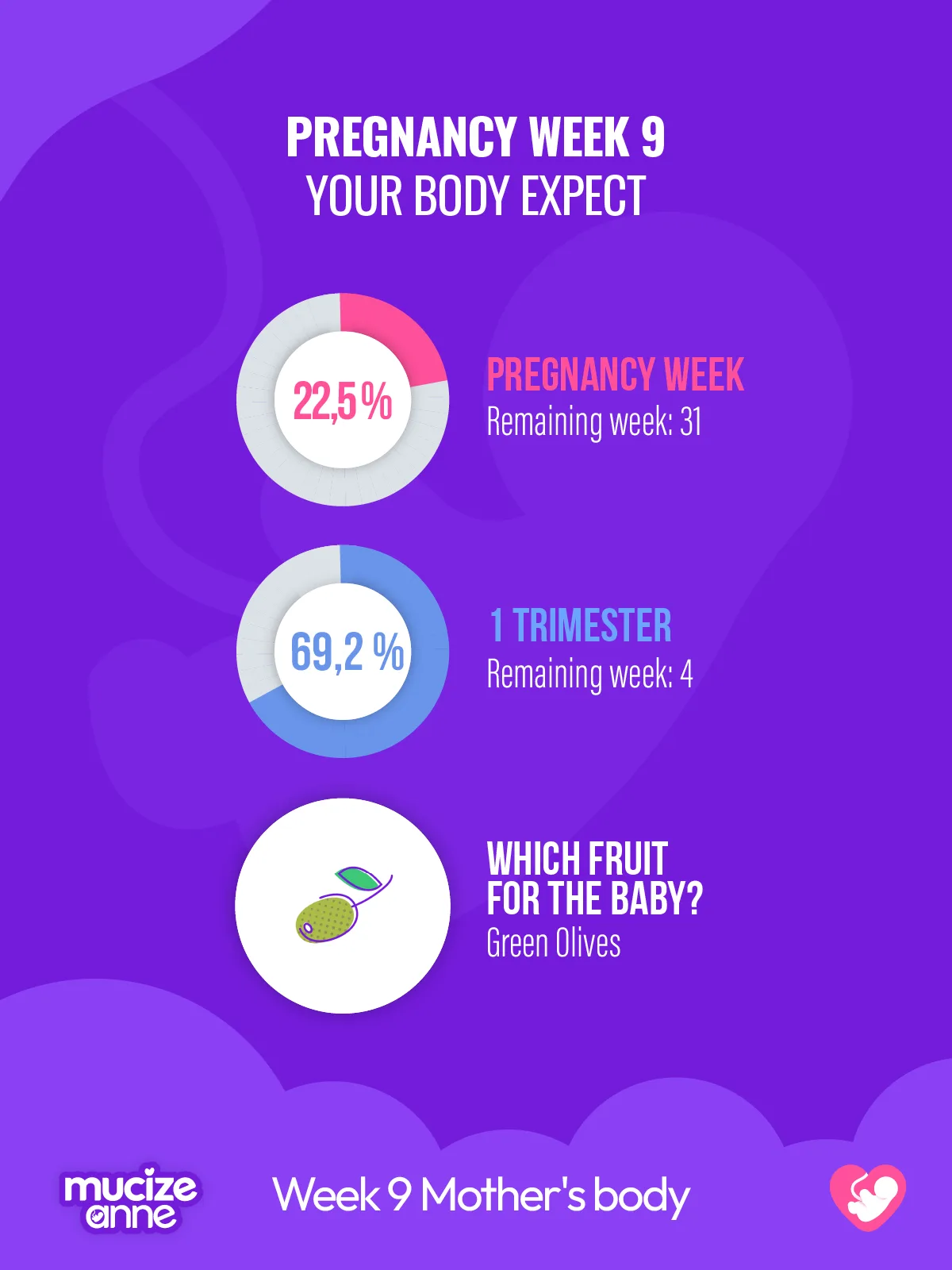
9th week of pregnancy
You are in your 9th week of pregnancy, and the end of the first trimester is slowly approaching. This is good news – especially if you’re experiencing morning sickness! Pregnancy hormones may be at their peak, so it may be a bit more challenging, but these symptoms will start to ease as you approach the second trimester. A little more patience!
Your baby has almost doubled in size this week and your uterus continues to expand. Don’t be surprised if your pants suddenly start to feel tight! Your belly may only be noticeable to you for now, but it will soon become more noticeable.
Have you made your exciting first doctor’s appointment? If you haven’t yet, it will probably be soon. This appointment can be quite busy, and it’s good to leave extra time in your schedule for things like blood tests and early ultrasound scans. Watching your baby’s heartbeat on the screen will be absolutely mesmerizing!
In the 9th week of pregnancy, you can start budget planning with your partner and create savings plans for the baby’s arrival. It is also useful to find out about maternity leave at work if you are employed. This way, when you tell your boss the good news, you’ll be ready to share your expectations and plans for maternity leave clearly. maybe you’ll have an excuse to go to work late 😃
9th Week of Pregnancy Your Baby Development
At 9 weeks pregnant, the baby’s facial features are starting to become clearer, which means he or she is starting to take on that sweet look. Your baby’s heartbeat can now be strong enough to be heard with fetal doppler!
How big is a 9-week-old baby?
This week your baby is the size of a green olive. It is about 1.2 to 4.2 centimeters long and weighs around 2 grams. The growth rate is increasing!
What Does a 9-Week Baby Look Like?
Your baby has grown to almost 1 centimeter in length and now looks like a miniature baby. Earlobes, prominent fingers and toes and a tiny nose have already formed. This is the last week of embryo status, which means that the baby’s head is becoming more rounded and upright. It has completely lost its tail and can now move freely in the amniotic sac. The elbow, knee, shoulder, ankle and wrist joints are working; the arms are starting to bend at the elbow and the tiny muscles are getting stronger. This week, she may even start sucking her thumb!
How many months is a 9-week pregnancy?
Doctors usually track pregnancy in weeks, but if you want to calculate it in months, 9 weeks of pregnancy means that you have completed 2 months and have entered the 3rd month. The first trimester is almost over!
9 Week Ultrasound
Your first doctor’s appointment usually takes place between 8-12 weeks. At this first appointment you can see your baby’s tiny heartbeat on ultrasound! This ultrasound is usually done transvaginally (from below) because your uterus is still positioned behind the pelvic bone. With a probe inserted through the vagina, you can see the image of your 9-week-old baby on the screen through sound waves (don’t worry, it won’t hurt!)
During the ultrasound you will see that your baby is shaped like a bean and this image confirms that the pregnancy is in the uterus (which means it is not an ectopic pregnancy). Your doctor can also show the gestational sac, yolk sac and fetal pole.
Week 9 of pregnancy, the risk of miscarriage may be on the minds of many expectant mothers. However, once you see or hear the heartbeat, the risk of miscarriage drops to 2 to 9 percent, depending on age, and decreases further in the coming weeks.
Other prenatal tests done this week may include hormone levels, blood type, white and red blood cell count, some sexually transmitted diseases and pap smears. You may also be screened for urinary tract infections with a urine test and protein levels will be checked. All these examinations will be completely worth it when you hold your baby – all this preparation will pay off when the time comes!
9th Week of Pregnancy Pregnancy Symptoms i
This is the week when the pregnancy hormone hCG is at its highest level in your body. This means that some of the symptoms of pregnancy can be most intense in week 9. Fortunately, after a few weeks the hormones will start to stabilize a bit and you will feel better. Here are the symptoms of week 9:
Emotional Fluctuations: Hormonal fluctuations and symptoms such as nausea and fatigue can make you more emotionally sensitive. Take some time for yourself, rest, meditate or just relax and watch a TV series. Avoiding stressful situations can be beneficial for your mental health.
Morning Nausea 80% of pregnant women experience morning sickness, but it can actually last all day long! If you suffer from nausea, you may be feeling mildly nauseous or you may be vomiting regularly. If you are expecting twins, morning sickness can be even more severe. The good and bad news is: At 9 weeks, morning sickness is at its peak. You may find that things like ginger, eating frequent meals and snacks, and vitamin B6 can help ease the nausea. Remember, this period will pass!
Frequent urination: As your uterus expands and blood flow to the pelvic area increases, you may feel the need to go to the bathroom more often than before pregnancy. Drink plenty of water; it is important to stay hydrated. You can get through this process more easily by planning toilet breaks.
Fatigue You may feel exhausted and tired because your body is using energy to grow your baby. Try to get more sleep and keep healthy snacks on hand; skipping meals during pregnancy may not be as easy as it used to be. You will regain some of your energy in the second trimester.
Stuffy Nose Surprisingly, pregnancy can cause your body to produce more mucus, so it’s a good idea to remember to bring tissues!
Headaches Hormonal fluctuations can cause headaches; thirst, lack of caffeine, hunger, lack of sleep and stress can also be triggers. Try to manage your other symptoms, eat often, get enough sleep and drink plenty of water. To relieve headaches, you can apply a hot or cold compress or rest. You should consult your doctor before taking any medication; paracetamol (Tylenol) is usually recommended, while naproxen and ibuprofen (Advil and Motrin) are not.
Is it Normal to Have No Symptoms at 9 Weeks of Pregnancy?
Yes, it is normal to reach week 9 and have no symptoms at all. Even if you are in the lucky minority, symptoms can still occur. Nevertheless, if you are not experiencing any symptoms, mention this to your doctor at your first appointment. Most likely, you are just lucky!
Your Belly in the 9th Week of Pregnancy
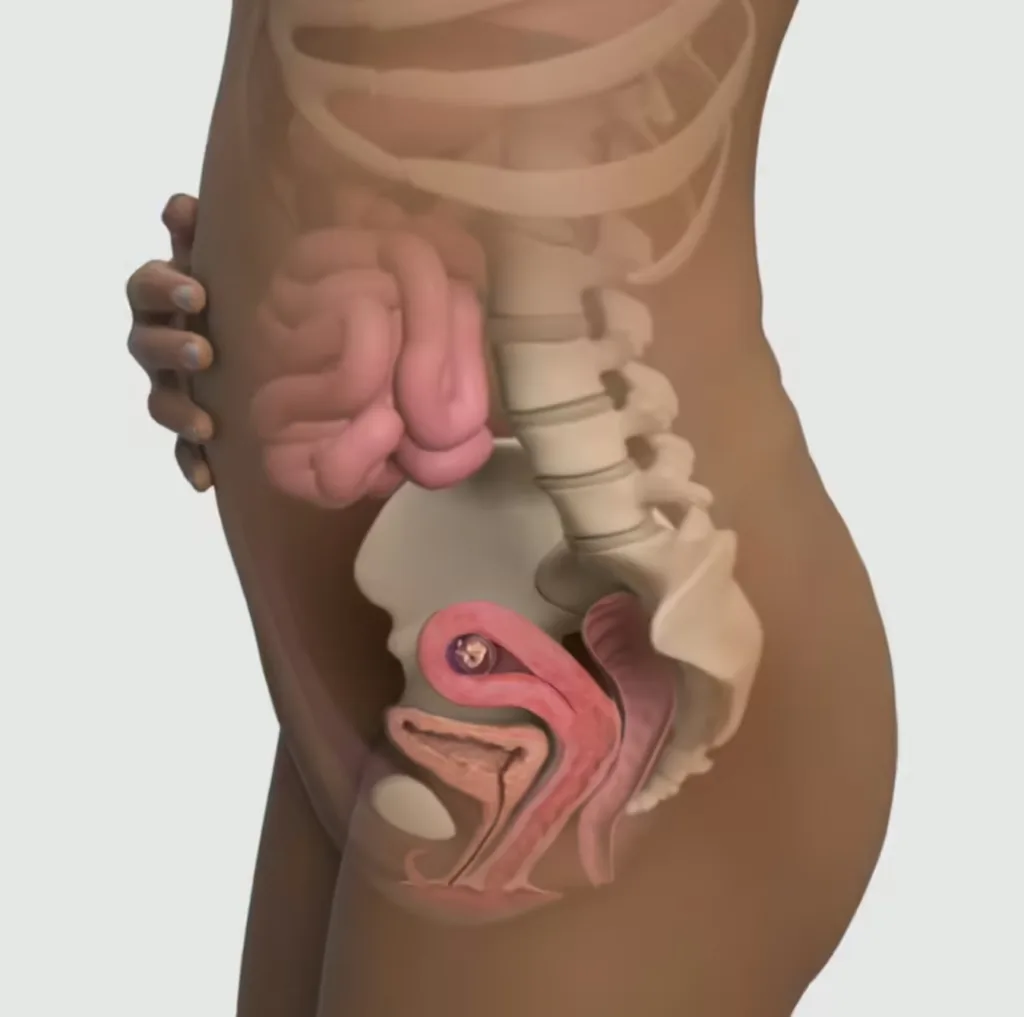
Many expectant mothers start having trouble buttoning their pants at 9 weeks. Your uterus is expanding to make room for your growing baby and has actually already doubled in size! At 9 weeks, your belly may be a little prominent. In the coming weeks, your uterus will start to grow out of the pelvic area.
At 9 weeks pregnant, weight gain is not only normal but also recommended. The amount of weight your doctor recommends during pregnancy can vary depending on your pre-pregnancy body mass index (BMI). For example, if you started pregnancy with a normal BMI, you may be recommended to gain between 11-16 pounds in total during pregnancy, of which 0.5 to 2.5 pounds should occur in the first trimester. If you are expecting twins, you should aim to gain about one kilogram per week at this time.
However, many expectant mothers may not gain or even lose weight at 9 weeks due to morning sickness and food aversion. It is important to share your concerns about this with your doctor. Be sure to let your doctor know if you are experiencing sudden or large weight loss, although most doctors say that a little weight loss is normal at this stage. When your appetite returns you will have the opportunity to stabilize your weight gain.
However, some expectant mothers who experience very intense nausea may need more serious medical treatment. Nausea and vomiting are common during pregnancy, but moms-to-be often don’t tell their doctor enough about these symptoms. Several over-the-counter and prescription medicines that are considered safe during pregnancy can control nausea, so tell your doctor about the symptoms you are experiencing and together you can decide on the best treatment.
Some expectant mothers may experience a condition called hyperemesis gravidarum (HG), a severe nausea that can cause severe dehydration. If you can’t drink fluids, are losing a significant amount of weight, or are fainting, you can contact your doctor for an evaluation to find out if you have HG. The good news is that there are treatment options for HG. You can take intravenous fluids to keep you hydrated, or you and your doctor may choose to try an anti-nausea medication to stop the vomiting.
What if you have twins in the 9th week of pregnancy?
If your 9-week symptoms have been intense, you may be surprised to learn during your 9-week ultrasound that you are expecting twins! This news may come as a bit of a shock, so give yourself time to process it. It’s normal to feel both excitement and anxiety when you find out you’re pregnant with twins; you’ll get used to the idea in time. You can manage the process better by talking to your doctor about what to expect when you are pregnant with twins and if there are things you should do differently.
Tips for the 9th Week of Pregnancy
You may not feel energized during this period, but you can relax by prioritizing your health and happiness. Here are some tips to help:
Prevent Heartburn: The hormone progesterone circulating in your body relaxes the muscles of your uterus to accommodate your baby, but it can also relax the valve between your esophagus and stomach, causing heartburn. To avoid this heartburn, try to eat small portions during the day (this also helps with nausea), avoid large meals in the evening and avoid spicy or fatty foods. If you still can’t get relief, you may want to consult your doctor and consider taking an antacid containing calcium. It is both soothing and helpful!
Switch to Stretchy Clothes: Are your regular pants getting tight but your maternity clothes are still too baggy? It’s time to get acquainted with stretchy fabrics! Get rid of all your leggings, joggers and dresses with elastic waistbands. Elastic waistbands will be your best friend at this stage; for now, you can make do with your existing stretchy clothes.
Drink plenty of water: Drinking more water can alleviate many pregnancy problems, from bloating to headaches and constipation. Try to drink eight glasses of water every day; the caffeine-free, clear liquids will keep you hydrated and help prevent pregnancy-related discomfort.
Frequently Asked Questions About the 9th Week of Pregnancy
Can gender be determined at 9 weeks of pregnancy?
Although the sex of the baby is genetically determined, it is usually not possible to detect it by ultrasound at this week.
Is caffeine consumption safe during pregnancy?
Caffeine consumption is considered safe in limited amounts (about 200 mg per day), but it is best not to make any changes without talking to your doctor.
What types of exercises are recommended?
Low-impact exercises, swimming, light weight training, pilates and kegel exercises are recommended, but you should consult your doctor before starting any exercise.
Which foods should I avoid?
You should avoid alcohol, raw or undercooked meat and seafood, unpasteurized dairy products and soft cheeses.
Is Nasal Congestion Normal in the 9th Week of Pregnancy?
Nasal congestion is a common symptom in early pregnancy. Pregnancy hormones thicken the nasal passages, which can lead to a narrowed and stuffy nose. In addition, as blood volume also increases during this period, the small vessels in the nose swell, which can further increase congestion.
Can I Hear My Baby’s Heartbeat with Home Doppler?
At 9 weeks gestation, it may be possible to hear the baby’s heartbeat with a home Doppler, but you shouldn’t be surprised if it doesn’t pick up any sound. It can be difficult to find the baby’s heartbeat with a Doppler because it is still deep in the pelvic area, which can sometimes cause unnecessary anxiety. For this reason, experts recommend having an experienced health professional listen to the baby’s heartbeat using a medical Doppler at a doctor’s appointment at 14 or 16 weeks.
Are Genetic Tests Performed in the 9th Week of Pregnancy?
If hereditary diseases, syndromes or disorders run in the family, two genetic screening tests are recommended in early pregnancy: extracellular DNA testing (cfDNA or NIPT) and carrier screening.
Extracellular DNA Test (cfDNA or NIPT): From the 10th week onwards, small pieces of the baby’s DNA can be found in the mother’s blood. This DNA is collected in a blood sample and tested for diseases such as sickle cell disease, spinal muscular atrophy, fragile X, cystic fibrosis, Down syndrome, trisomies, triploidy and other genetic abnormalities.
Carrier Screening: This screening analyzes genetic information through a simple blood test. The results can help you find out if your baby is likely to carry certain autosomal recessive disorders.
You can discuss these tests with your doctor to determine which screenings are best for you.
Checklist for the 9th week of pregnancy
- Review Genetic Screening Options: Learn about genetic tests, such as extracellular DNA testing (cfDNA) and carrier screening, and talk to your doctor to determine the best options for you and your baby.
- Prepare for your first ultrasound appointment: You may have your first ultrasound appointment during these weeks. Write down all your questions and curiosities for your doctor’s appointment.
- Eat Small Meals: Eat small portions throughout the day to reduce heartburn and nausea. Try to avoid fatty and spicy foods.
- Don’t Forget to Drink Water: Staying hydrated relieves both headaches and digestive problems. Make sure you drink plenty of water throughout the day.
- Switch to Comfortable Clothes: If your regular pants are getting tight, consider switching to clothes with elastic waistbands. Elastic fabrics increase your comfort during this period.
- You can try alternative methods for nausea: Ginger tea, vitamin B6, frequent snacking can all help to ease nausea. You can experiment to see which one works.
- Don’t be afraid to take breaks: If you feel tired, take small breaks. Short naps or just spending time relaxing will help you re-energize.