
Head butt length – CLR
Regular doctor check-ups and prenatal screenings are very important during pregnancy. With regular tests and screenings, gestational age and estimated date of birth are determined. Chromosomal abnormalities can be detected with regular scans.
An estimate of the head-butt length (CRL) of the fetus is one such scan. Fetal ultrasound is used to predict gestational age and monitor fetal growth, usually measured in the first trimester of pregnancy. In the first trimester of pregnancy, especially between 7 and 13 weeks of gestation, it is considered the most accurate measurement for determining gestational age.
Head butt length – What is CLR?
The CRL is the length of the fetus measured from the top of the head to the hip (head butt length). This measurement is in centimeters and does not take into account limbs or egg sacs. Since CRL can be obtained between about 6 and 7 weeks of pregnancy, the upper limit is 14 weeks, which is useful in calculating the gestational age of the fetus. Low biological variability at this stage of pregnancy provides the most accurate estimate of your baby’s gestational age.
When the gestational age is evident from the CRL, your doctor can tell you an estimated due date. The sooner this scan is done, the more accurate it will be. Keep in mind that the gestational age is different from the age of fertilization. Gestational age is calculated from the first day of your last menstrual period, while the age of fertilization is usually two weeks less than gestational age.
Uses of CLR testing
Head butt length (CRL) has several important uses in obstetrics and gynecology. Some of these include:
1. Estimating gestational age
CRL is an accurate measure of gestational age in the first trimester of pregnancy and is used to predict due date and monitor fetal development.
2. Monitoring fetal growth
CRL is also used to monitor fetal growth throughout pregnancy. Regular ultrasounds are performed to measure the length of the head and butt and make sure that the fetus is growing properly.
3. Identifying anomalies
CRL measurements can help identify abnormalities in fetal development. Deviations from the expected growth rate can be an early sign of a potential problem and require further testing and follow-up care.
4. In determining the method of delivery
CRL measurements can also help guide decisions about delivery methods. For example, if the fetus is significantly larger or smaller than expected for gestational age, your doctor may recommend a different delivery method.
5. Evaluation of multiple pregnancies
In multiple pregnancies (such as twins or triplets), CRL measurements can help determine if fetuses are developing similarly. This information is used to monitor the health of fetuses and plan childbirth.
6. Determination of fetal weight
CRL measurement can also be used to estimate fetal weight. Using mathematical formulas, CRL measurement can estimate fetal weight, which can be useful in determining appropriate delivery methods and planning potential complications.
The relationship between CLR measurement and infant health
A CRL scan helps your doctor assess your baby’s health and development in the womb. The average baby is about 51 cm tall and weighs about 3.5 kg when born. With this scan, it is possible to find out your baby’s height and weight at different stages of your pregnancy. These are some of the issues that CRL helps uncover:
- If the head butt length is 7 mm or more, transvaginal ultrasound can detect the heartbeat of the fetus. This ultrasound is done through the vagina.
- Head butt length may reveal that there is no heartbeat and, accordingly, a missed miscarriage. In such cases, the expectant mother does not experience the usual symptoms of miscarriage, such as pain or bleeding. In this case, also known as a hidden miscarriage, the placenta continues to produce the pregnancy hormone, causing the woman to believe that she is still pregnant.
- If your average pouch diameter (MSD) is less than 5 mm larger than the CRL measurement, a miscarriage may be possible during the first trimester. This can occur despite the fact that a normal heartbeat is detected in your baby.
- Head butt length measurements can also be indicative of chromosomal abnormalities, such as Edwards Syndrome (trisomy 18), triploidy, or other growth-related problems.
- According to a study, there is a direct correlation between CRL measured before 10 weeks of gestation and birth weight. This is a one-of-a-kind study because other studies focus on the correlation between both factors only after the 10th week of pregnancy. In the study, a total of 632 ultrasound scans were performed on pregnant women without any complications. The results showed that there was a positive correlation between CRL in the first trimester and the birth weight of the fetus. This can help predict low birth weight (LBW) and ensure that expectant parents are emotionally prepared for preterm birth and newborn care.
Can the gender of the baby be learned with the CLR test?
Head butt length (CRL) is used in fetal ultrasound to predict gestational age and monitor fetal growth. However, it is not a reliable method of determining the sex of the baby. The research showed that there was no significant difference in CRL measurements between male and female fetuses. While there have been some claims that CRL can be used to predict sex based on the size of the fetal genital tubercle, these claims have not been supported by scientific evidence.
Instead, the sex of the fetus is typically determined by ultrasound during the second trimester of pregnancy (between 18 and 22 weeks), when the genitals are more developed and can be visualized on an ultrasound image. Even then, there is a small margin of error in determining gender, and ultrasound technicians may not always be able to determine gender precisely. Therefore, while CRL is a useful measurement in estimating gestational age and monitoring fetal growth, it is not a reliable method for determining the sex of the baby.
CLR Table
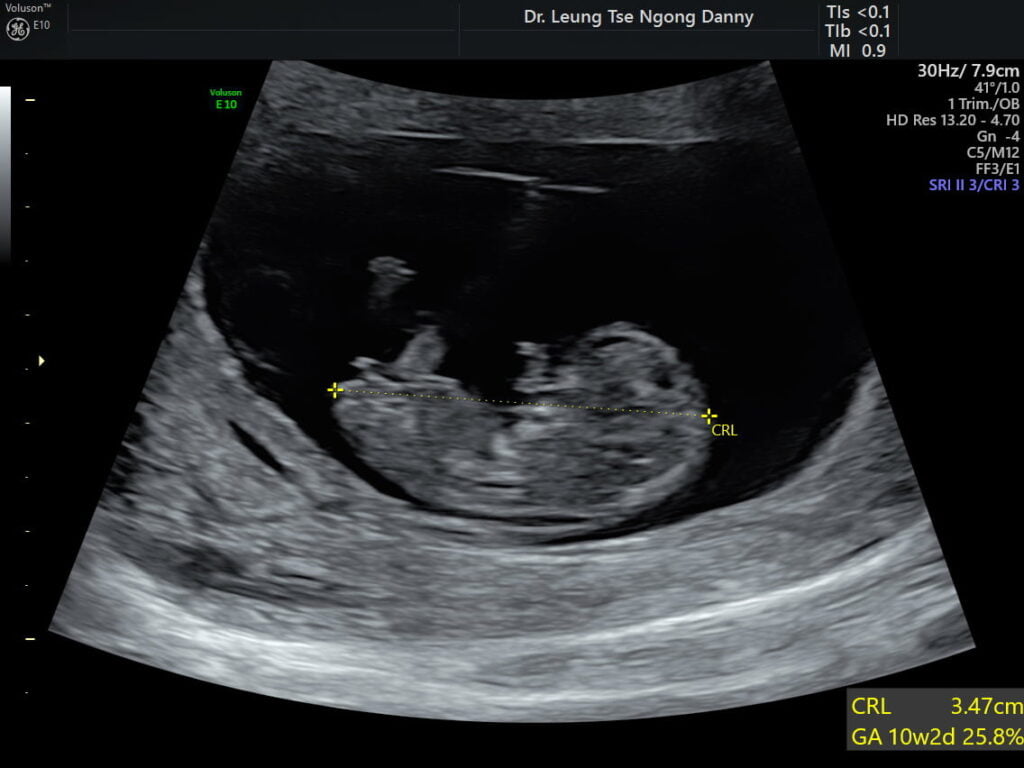
The CRL diagram was first introduced by Robinson in 1975 and is still used as a primary reference for pregnancy dating and evaluation.
| Gestational Age | CRL (mm) | KILO |
| 6 weeks | 4 mm | < 1gr |
| 7 weeks | 11 mm | < 1gr |
| 8 weeks | 17 mm | 1 g |
| 9 weeks | 23 mm | 2 g |
| 10 weeks | 34 mm | 4 g |
| 11 weeks | 44 mm | 7 g |
| 12 weeks | 57 mm | 14 g |
| 13 weeks | 68 mm | 23 g |
| 14 weeks | 81 mm | 43 g |
These are approximate measurements of the fetus at different stages of pregnancy. Other factors such as maternal age, smoking habits, and the amount of folic acid consumed can affect CRL in pregnancy.
Every baby is different, and small differences in growth and development are normal. Your doctor’s benchmark measurements may also differ from the CRL chart. After a CRL scan, be sure to chat with your gynecologist about your baby’s development and ask for a detailed report on it.
Frequently Asked Questions
Can the CRL measurement be inaccurate?
Like all metrics, the CRL can be inaccurate in some cases. Factors such as fetal position, maternal obesity, and technical errors during ultrasound can affect the accuracy of the measurement. However, CRL is considered a highly accurate method for estimating gestational age in the first trimester of pregnancy.
What if the CRL is lower than expected?
A lower-than-expected CRL measurement may indicate a problem with fetal growth. In such cases, further testing may be recommended to identify potential problems.
Is CRL smaller in baby girls?
Scientifically, there is no significant difference in CRL measurements between male and female fetuses. However, gender can be accurately determined by ultrasound around 18-20 weeks of gestation, when the genitals become visible on ultrasound.
What is the normal CRL range at week 8?
At the 8th week of pregnancy, a normal CRL interval in pregnancy is usually between 16-24 mm. It is important to note that the range may vary depending on the accuracy of the measurement and the individual characteristics of the fetus and the mother.