
When Does the Baby Enter the Birth Canal?
When does the baby enter the birth canal? This question refers to one of the most curious and critical moments of the pregnancy process. The beginning of labor carries a different experience for each expectant mother, and the baby’s entry into the birth canal is one of the most important stages of this process.
In this article, we will discuss in detail the time of babies’ entry into the birth canal, the importance of this moment, and what expectant mothers should pay attention to in this process. In the late stages of pregnancy, we will provide information about the position of the baby, the initial signs of labor and the stages of the birth process, as well as explain in detail what happens when the baby enters the birth canal.
When Does the Baby Enter the Birth Canal?
When does the baby enter the birth canal? The answer to this question is vital for the successful progress of the birth process. The baby’s entry into the birth canal is an indication that labor begins naturally and progresses in a healthy way. This stage is a critical juncture for the health of both the baby and the mother. Entry into the birth canal usually occurs when the mother’s uterus is fully opened and the baby is ready for birth. This process may differ for each woman and may take several hours, or sometimes several days.
There are many factors that affect the timing of this process. These factors include the position of the baby, the structure of the mother’s pelvis, hormone levels, and previous birth experiences. The timing of the baby’s entry into the birth canal also plays an important role in deciding the type of delivery (normal delivery or cesarean section). Therefore, understanding this stage of the birth process is very important for both expectant mothers and health professionals.

Last Trimester of Pregnancy: Baby’s Position and Preparation
The last trimester of pregnancy is a critical period when the baby prepares to enter the birth canal. At this stage, the position of the baby greatly influences how the birth will take place. Generally, for a healthy birth , the baby should be in a head-down position and facing the mother’s spine. This position is known as the “anterior position” and is ideal for entry into the birth canal. However, in some cases, babies may be in a breech position or in a side lying position. Such positions can complicate the birth process and sometimes require intervention.
In the last trimester, the baby’s preparation for birth also brings with it many changes in the mother’s body. Physical changes are experienced, such as the softening and dilation of the cervix and the downward progression of the baby. During this period, expectant mothers should frequently go to the doctor’s control and have the baby’s position checked regularly. Imaging techniques such as ultrasound can be used to determine if the baby’s position is suitable for birth.
In addition, during this period, mothers are advised to learn exercises and breathing techniques that will allow them to relax and facilitate the birth process while their bodies are preparing for childbirth. Pelvic floor exercises, walking, and light aerobic exercises can both help the baby get into the right position and strengthen the mother’s physical condition for delivery.
Signs of childbirth: when to go to the hospital?
When the birth process begins, one of the most important questions for expectant mothers is, “When does the baby enter the birth canal and when should I go to the hospital?” There are several signs that indicate the onset of labor, and being aware of these symptoms allows you to go to the hospital with the right timing.
The first and most obvious sign of labor is the onset of contractions that come at regular intervals and increase in intensity. These contractions are a sign that the uterine muscles are working to push the baby into the birth canal. Contractions are usually felt in the lower back and abdomen and become more frequent and strong over time.
Another important symptom is the arrival of water. With a rupture of the amniotic sac, the flow of fluid from the body is a clear sign that the birth process has begun. In this case, it is important to immediately contact the medical institution.
Another symptom that can be seen with the enlargement of the cervix is a bloody discharge. This can usually be seen a few days or hours before the onset of labor.
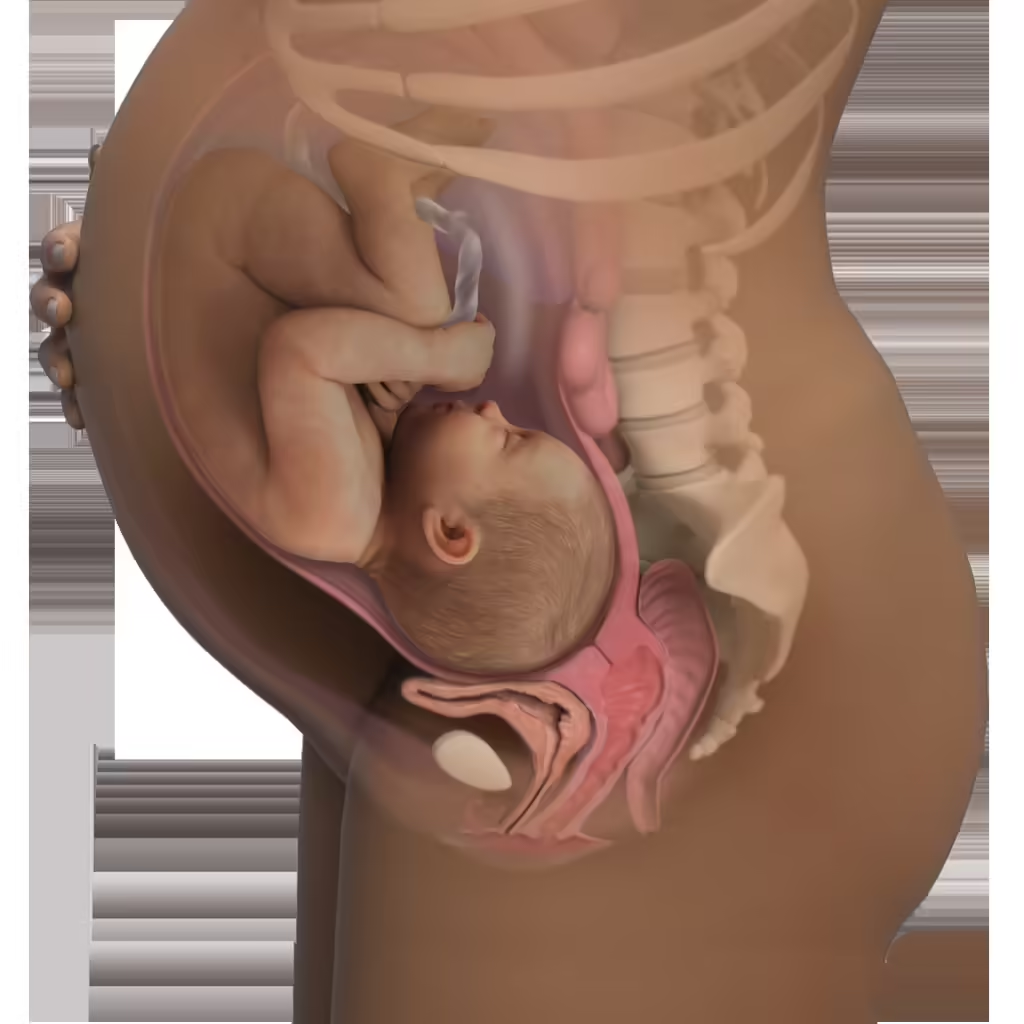
How do I know if the baby has entered the birth canal or turned upside down?
To understand if the baby has entered the birth canal or turned upside down, certain symptoms and physical changes can be observed:
- Changes in the position of the baby
- The baby’s turn upside down usually occurs in the last trimester of pregnancy. Expectant mothers may feel this change as a difference in the baby’s movements.
- Change in the shape of the abdomen
- A change in the position of the baby can cause changes in the shape of the mother’s abdomen. The abdomen may begin to protrude further down and forward.
- Feeling of Pressure
- As the baby descends towards the pelvis, the mother may experience a feeling of increased pressure in the pelvic area. This can be a sign of the baby’s entry into the birth canal.
- Ease of Breathing
- As the baby goes down, the pressure on the diaphragm decreases. This can allow expectant mothers to breathe more easily.
- Ultrasound Controls
- Medical imaging methods such as ultrasound are used to confirm the baby’s position. At these check-ups, health professionals evaluate the baby’s position and preparation for entry into the birth canal.
- Doctor’s Examination
- In routine doctor examinations performed in the late stages of pregnancy, the position of the baby and its proximity to the birth canal are checked.
The physical signs of the baby’s entry into the birth canal and the doctor’s examinations play an important role in understanding the baby’s position. When the baby enters the birth canal or turns upside down, these changes can be felt by the expectant mother in a variety of ways. Since every pregnancy is different, it is important for expectant mothers to take into account their own experiences and the changes they are feeling, and not to neglect regular health check-ups.
Normal Birth Process and Baby’s Entry into the Canal
The normal birth process usually consists of three stages, and different processes and symptoms are seen in each stage. This process includes from the beginning of labor to the birth of the baby, followed by the birth of the placenta. Each expectant mother experiences this process differently, but in general, the following stages and characteristics are observed:
- First Stage: Premature and Active Birth
- The first stage of labor begins with irregular and mild contractions. In this process, the cervix expands (dilatation) and becomes thinner (effusion), making room for the baby to enter the birth canal. [1] [2]
- During preterm labor, expectant mothers usually stay at home and do not go to the hospital until the frequency and severity of contractions increase.
- In active childbirth, the cervix expands from 6 cm to 10 cm, and contractions become stronger and more regular. This process usually takes 4 to 8 hours.
- Second Stage: Birth of the Baby
- The second stage begins with the complete opening of the cervix and ends with the birth of the baby. This phase can last from a few minutes to a few hours.
- As the baby passes through the birth canal, it makes various position changes. These movements facilitate the passage of the baby through the pelvis and usually proceed with the head forward.
- Stage Three: Birth of the Placenta
- The third stage begins after the birth of the baby and ends with the birth of the placenta. This phase usually takes 30 minutes, but the process can take up to an hour.
- “Stage Four”: Postpartum
- Some experts refer to the period of several hours after the birth of the placenta as the “fourth stage”. During this process, the mother bonds with her newborn baby, and paramedics monitor for possible bleeding.
This information provides a detailed overview of how the birth process proceeds and the critical moments when the baby enters the birth canal. It is important to remember that every birth is different and these stages may vary for each expectant mother. At every stage of this process, it is essential to observe the health status of the expectant mother and the baby in order to ensure that the birth takes place in a healthy and safe way.
The Baby’s Journey in the Birth Canal
During the birth process, as the baby passes through the birth canal, it performs a series of complex and finely tuned movements. This journey involves the baby taking its first step into the world by entering the birth canal and consists of several important stages:
- Engagement
- The baby’s head is located in the upper part of the pelvis. This usually takes place a few weeks before giving birth and is called an “engagement”. [3]
- Descent
- During childbirth, the baby’s head descends from the pelvis. This descent is supported by the mother’s contractions and allows the baby to move through the pelvis.
- Flexion
- The baby’s head tilts forward when it meets the pelvic bones. This allows the baby’s head to pass through the pelvis with the smallest diameter.
- Internal Rotation
- As the baby’s head moves through the pelvis, the shoulders rotate so that they enter the widest part of the pelvis. This facilitates the passage of the baby through the pelvis.
- Extension
- When the baby’s head reaches the lower part of the pelvis, it bends back and exits the birth canal. This allows the baby’s head to become visible during its birth.
- External Rotation and Expulsion
- After the baby’s head is born, the shoulders rotate to pass through the pelvis. This facilitates the birth of the rest of the baby. The baby’s body is usually born with several pushes.
This process can vary depending on many factors, such as the size and position of the baby and the structure of the mother’s pelvis. During the birth process, the baby performs these movements sequentially and usually naturally. These movements ensure that the baby passes through the pelvis successfully and that the birth takes place safely.
At this stage of the birth process, it is important for expectant mothers and health professionals to monitor the baby’s progress and whether there are any complications. The baby’s progress through the birth canal is part of the natural flow of labor, and it is important for expectant mothers to feel as comfortable and supported as possible during this process.
Stages and Timing of Birth
The birth process is usually divided into three main phases, each of which differs in duration and characteristics:
- First Stage: Opening and Thinning of the Cervix
- The first stage of labor begins with the dilation and thinning of the cervix. This phase consists of two phases: preterm labor and active labor.
- Preterm Birth Phase: This phase usually lasts longer and is characterized by milder contractions. The cervix dilates by about 4-6 cm.
- Active Labor Phase: In this phase, contractions become stronger and more regular, the cervix expands up to 10 cm. This phase can last an average of 4-8 hours.
- Phase Two: Birth of the Baby
- The second stage begins with the complete opening of the cervix and ends with the birth of the baby. This phase can last from a few minutes to a few hours.
- At this stage, the mother makes an effort to push the baby during contractions and the baby’s passage through the birth canal takes place.
- Stage Three: Birth of the Placenta
- This stage, which begins after the birth of the baby, ends with the birth of the placenta. It usually takes 5 to 30 minutes, but it can take up to an hour.
Every birth is different and these periods should be considered a general guide. Some expectant mothers may go through these stages more quickly, while others may take longer. In addition, factors such as previous birth experiences, the general health status of the expectant mother, and the position of the baby can also affect the duration of labor and the course of labor.
More information and guidance about these stages of the birth process allows expectant mothers to approach birth in a more prepared and informed way. In each of these stages, it is important to carefully monitor the health status of the expectant mother and the baby in order for the birth to take place in a safe and healthy way.
Frequently Asked Questions: Birth Canal and Baby
In this section, answers to frequently asked questions about the birth canal and the baby will be given. These questions will cover some of the topics that expectant mothers are most curious about, and answers will be provided with reliable information.
When does the baby enter the birth canal?
The baby enters the birth canal, usually during the active phase of labor. This process begins when the cervix is fully opened (10 cm dilatation) and the expectant mother begins to experience a pushing sensation with contractions.
How long does it take to pass through the birth canal?
The time it takes to pass through the birth canal varies depending on many factors. For first-time mothers, this period can be longer, often ranging from a few hours to several days.
What should be the position of the baby during birth?
Ideally, the baby should be upside down and facing the mother’s spine (anterior position). This position facilitates the passage through the birth canal and helps with normal delivery.
Does the baby suffer when passing through the birth canal?
Babies’ capacity to feel pain is still not fully understood. However, it is known that the birth process can be stressful for the baby and they can also be affected by this process.
What should be done if there is a snagging in the birth canal?
If the baby is stuck in the birth canal, doctors can perform various interventions. This may require the use of vacuum or forceps, or an emergency cesarean section. Each situation is evaluated according to the health status of the mother and baby
Conclusion: What to do when the baby enters the birth canal?
When the baby enters the birth canal, the expectant mother and the birth team need to:
- Staying Relaxed and Calm
- The baby’s entry into the birth canal is the most intense and challenging stage of labor. It is important for the expectant mother to try to relax and breathe deeply.
- Practicing Proper Breathing Techniques
- Using breathing techniques during labor can manage pain and help in the pushing process.
- Following the Guidance of Health Professionals
- Following the instructions of the doctor or midwives during childbirth helps the birth proceed safely and effectively. It is important to pay attention to the pushing instructions.
- Trying Different Positions
- Trying different positions during labor can ease the baby’s passage through the canal and reduce pain.
- Asking for Help for Pain Control When Needed
- If the pain is very severe, the use of pain relief methods such as epidurals may be requested.
- Always Prioritizing Your Baby’s and Your Own Health
- During the entire birth process, it is important to take care of the health status of both the baby and the mother and to intervene when necessary.