
Umbilical cord prolapse during pregnancy
Umbilical cord prolapse is a condition in which the umbilical cord slips from the front of the baby into the vagina during birth. This is very rare and usually does not cause serious problems. However, umbilical cord compression is a dangerous possibility. When the umbilical cord is pinched, oxygen-rich blood flow to the baby is restricted. Because of this possibility, cord prolapse is a medical emergency. If your water breaks and you feel the umbilical cord in your vagina, you should go to the hospital immediately.
What is Cord Prolapse?
The umbilical cord usually comes with the placenta after the baby. If the umbilical cord enters the birth canal before the baby during birth, this is called umbilical cord prolapse .
Cord prolapse is a rare condition. Umbilical cord prolapse occurs in only 0.17 percent of births. There is a possibility that the dangling cord may get stuck. If the cord is pinched, the blood supply to the baby is cut off, and this is serious and requires medical attention.
What are the symptoms of umbilical cord prolapse?
Symptoms of sagging umbilical cord include:
- During the pelvic examination, the sagging cord can be observed.
- If the umbilical cord sags, you will feel it in your vagina.
- Your baby’s movements may be slowed or the umbilical cord may be prolapsed if he has an abnormal heart rate pattern.
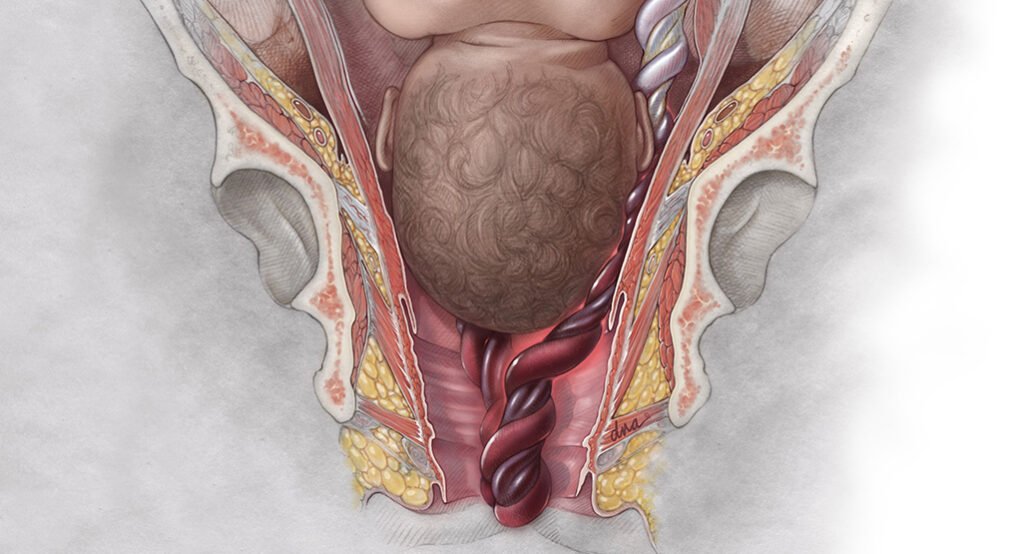
Causes of umbilical cord prolapse
The causes of umbilical cord prolapse are not known exactly. In general, when vacuum is used during childbirth, the umbilical cord is more likely to sag. In addition, it happens more often when the part of the baby’s body that goes down during birth does not fill the pelvis. If the baby is in a side position or with its head up instead of upside down during birth, the possibility of sagging of the cord ligament increases.
Other risks that can cause umbilical cord prolapse include:
- Premature birth (before 37 weeks)
- If the baby’s weight is less than it should be
- It is likely to be seen in twins and the second baby.
- If the amniotic fluid is more than it should be
- If your umbilical cord is too long
- Giving birth too long
- The expectant mother is 35 years of age or more
- It is likely to be seen in the second and third pregnancies.
However, cord prolapse can occur without any risk factors.
Can umbilical cord prolapse be prevented?
Unfortunately, there is no way to prevent umbilical cord sagging. However, if you have the opportunity to measure the baby’s heart rate, you can track it. If you see any abnormalities, you should contact your doctor.
What to do if you feel the umbilical cord sagging?
If your water breaks or you feel the umbilical cord in your vagina, go to the hospital immediately or call an ambulance.
If you think you are getting your water or feeling the umbilical cord in your vagina, lie face down until the ambulance arrives, with your head and chest on the floor. Take a pillow under you and hold it in a prone position with your hips positioned above your heart. This position will reduce the pressure on the umbilical cord, helping blood to flow to the baby.
What happens if the umbilical cord is prolapsed?
Umbilical cord prolapse is a medical emergency. If your umbilical cord is prolapsed, your doctor will monitor your baby’s heart rate and deliver it as soon as possible. If the cord has slipped out of your vagina, your doctor will try to keep it warm and moist. You can wrap it in wet gauze and try to insert it back into your vagina.
What is umbilical cord impingement?
Compression of the umbilical cord means that less blood reaches the baby in terms of oxygen as a result of pinching or tightening the cord. The cord can be pinched by the baby’s head or torso as it moves downward during delivery. If the compression takes long enough and the baby is not born, neurological problems may occur or the baby may be stillborn. While this may be scary to think about, keep in mind that this is unlikely to happen. Umbilical cord impingement is so rare that there is no clear information on how often it actually occurs.
Follow our Birth category for more content related to childbirth.