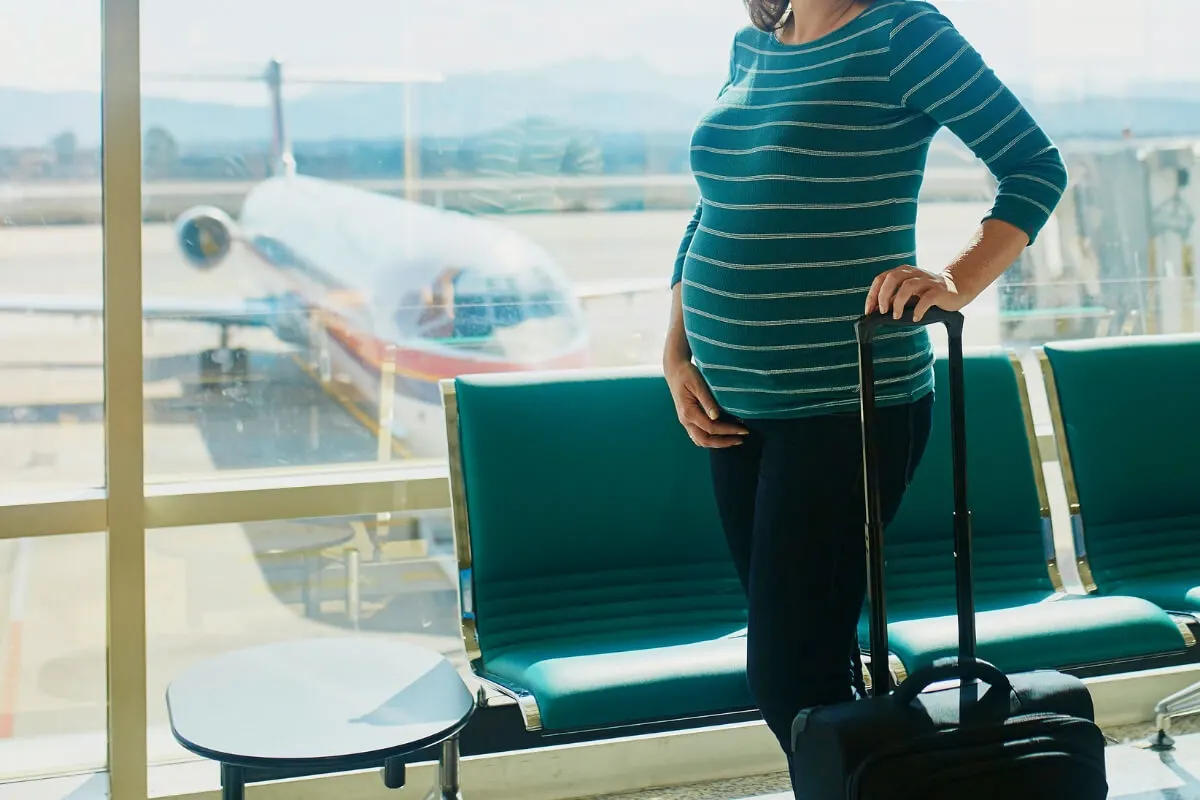
Air travel during pregnancy
Air travel during pregnancy is a condition that should not be a cause for any concern as long as there are no existing complications. The best time to travel during pregnancy is the last weeks of the third trimester, when you leave behind the morning sickness experienced in the first trimester and you should be most careful.
Can pregnant women board a plane?
Is it possible to travel by plane during pregnancy? The answer to the question is yes. As long as they have had an uncomplicated pregnancy so far, a pregnant woman To the 36th week of her pregnancy You can travel by plane as much as you can. However, there are situations in which air travel can be aggravating, and women who have previously had miscarriages, fetal loss, and premature births should stay away from the option of air travel during pregnancy. There are known medical issues that put women at high risk during a flight, such as spotting, gestational diabetes, high blood pressure , and a ruptured placenta, and it’s best to discuss with a doctor whether or not it’s safe to travel by plane during pregnancy.
In which weeks can air travel be done during pregnancy?
The best time to travel by plane during pregnancy is the second trimester, that is, weeks 14 to 27. This is the period of pregnancy when women feel their best. Energy levels are high and the risk of miscarriage or premature birth is the lowest. The first trimester is when most women experience morning sickness and are at the highest risk of miscarriage, so doctors advise against unnecessary travel activities during this time.
As long as the pregnancy is uncomplicated, the third trimester is not risky. Most airlines allow pregnant women to fly up to 28 weeks without question. For air travel, you may need to get a signed confirmation from your doctor or a healthcare provider in the 7th month of pregnancy confirming the date of birth and that you are unlikely to have labor on the plane.
Risks of air travel during pregnancy
If you need to travel by plane during pregnancy, there are some risks to keep in mind:
Deep vein thrombosis
Flying for long hours while sitting on an airplane slows down circulation to the leg and pelvic area. This increases the risk of blood clots in the veins, which is one of the main dangers of flying while pregnant. These clots can be life-threatening if they travel to vital organs such as the lungs or heart. Pregnant women, especially those who are overweight, are at higher risk for this condition called deep vein thrombosis.
Nasal and ear congestion problems
If you have a stuffy nose frequently or are sensitive to pressure changes, the combination of air conditioning in the cabin and changes in cabin pressure will cause congestion in your nose and ears.
Air turbulence
Erratic, turbulent air pockets at high altitudes can shake an aircraft violently. Because severe weather turbulence is unpredictable, it poses a real threat of injury to anyone who is not tethered to their seat. This is especially risky for pregnant women flying in the 3rd trimester, it can be significant physical trauma to the body.
Aerotoxic syndrome
One of the risks of air travel during pregnancy is caused by inhaling polluted cabin air on board. The air supplied to the cabin comes from jet engine compressors. If there is a malfunction in the systems, such as leakage in the gaskets, toxic gases may leak into the cabin. Although it may not produce any immediate effects, some toxins can threaten a growing fetus.
Edema
Long flights can cause your legs to swell due to fluid retention, a condition called edema. Women who are still experiencing pregnancy discomfort or who are prone to motion sickness may have a hard time flying as pressure changes and motion sickness can worsen and make them nauseous.
Which pregnant women should not prefer to travel by plane?
Pregnant women who need to travel by plane during pregnancy but carry the following risks should be careful. If you have one or more of the following conditions, you should consult your doctor before flying:
- Gestational diabetes, high blood pressure and preeclampsia .
- Symptoms of miscarriage such as cramping, pain and bleeding
- If you are under observation due to preterm birth
- Cervical insufficiency
- Intrauterine growth restriction
- History of ectopic pregnancy or miscarriage
- DVT history, blood clots, varicose veins
- Premature rupture of membranes (PROM)
How to stay comfortable during a flight during pregnancy?
A few simple precautions can ensure that your air travel is a smooth experience. Here are some tips to make flying during pregnancy a breeze:
- When booking your flight, choose a seat adjacent to the wing, this is the most stable part of the aircraft. Choose an aisle seat so that there is extra space for you to stretch your legs and easily go to the toilet during the flight. You can also consider premium class for maximum comfort.
- Have a light meal before boarding. Avoid consuming anything that you know will cause gas and bloating later on.
- Pack the essentials of your comfort, such as a neck pillow, heat pack, water bottle, and anything else that makes you comfortable.
- Small meals, light snacks, crackers, mints, etc. can ease your nausea during the flight.
- Sitting in the same position for a long time can initiate stiffness, swelling and cramps in the feet. Therefore, get up once an hour and walk up and down the aisle while doing simple stretches. If there is an empty seat next to it, put your feet up and stretch them. You can also rotate your ankles and wiggle your toes to help improve blood circulation.
- Wear compression stockings during the flight. They keep blood circulating well and help relieve swollen vessels and reduce the risk of thrombosis.
- The conditioned air in the cabin can absorb moisture and dehydrate you, so drink plenty of fluids.
- Your seatbelt must always be fastened against turbulence in the air. Make sure that it goes down to the bottom of the abdomen and under the buttocks.
Tips for Air Travel During Pregnancy
Make sure you’re ready for your trip with the following tips for air travel during pregnancy:
Consult Your Doctor or Healthcare Professional
The first step is to ask your doctor if it is safe to fly. In international flight conditions, especially when pregnant, there are numerous risk factors that need to be understood and addressed. Depending on how far along in your pregnancy you are and any health problems you may have, your doctor may be able to assess whether flying is safe for you. Getting the doctor’s written consent also makes all the difference when handling the airline’s policies regarding pregnant women.
Search for Pregnant Airlines
Some airlines offer special support to pregnant women. Make a list and choose the one that suits you best. It is an advantage to inform them about your pregnancy in advance, as they can offer you the best options in terms of seats, in-flight catering services, wheelchair companions, luggage assistance, and additional amenities that are not available to other passengers. Most airlines require a doctor’s approval after the 28th week of pregnancy and will not allow you to fly after the 36th week, so find out their policies and restrictions before booking.
Take All Precautions
Make sure you have all your essentials covered, such as a neck pillow, prescription medications from your doctor, healthy snacks, plenty of fluids, and comfortable clothes. Book seats that allow you to sit comfortably and provide easy access to the nearest toilet. Always stay glued to your seat, except when you take breaks to stretch and move around a bit.
Carry a Card with Emergency Contact Information
In the event of an emergency, it is imperative that the person caring for you has all the basic information they need, such as the contact numbers of the doctors and the family and the medical history. Some of the information that should be on the list includes:
- Your healthcare provider’s name and contact numbers.
- The name and phone numbers of your emergency contacts.
- Your local information, including your address and phone number.
- Your prenatal and medical history, which includes information about your date of birth, most recent check-up, allergies, vaccination history, previous births, and reviews from the healthcare provider.
- Your health insurance name, phone number and policy number, if applicable

Frequently Asked Questions
Here are some frequently asked questions about air travel during pregnancy:
Are pregnant women allowed to fly by plane?
Yes, women who have had a healthy pregnancy can fly without worry until the end of the 35th week. In addition, most airlines require signed confirmation from your healthcare provider that you are fit to fly after 28 weeks.
Does traveling by plane cause miscarriage?
The risk of miscarriage by plane is highest in the first trimester, and if you have such a history, it is advisable not to fly. Women with healthy pregnancies can fly all trimesters without the risk of miscarriage.
Driving through Airport Metal Detectors: Is it safe?
Yes, it is safe to go through screening machines at an airport. Metal detectors use a low-intensity magnetic field to detect metallic objects that have no effect on our bodies. The rest of the scanners use radio waves or low-intensity X-Rays to scan your clothes. The radiation dosages associated with them are expressed in microsievert units. While the instruments use levels as low as 1 microsievert, it takes 5,00,000 microsieverts to harm your unborn child.
Will cabin pressure on the plane hurt my baby?
There is no evidence to suggest that cabin pressure affects the unborn baby. Cabin pressures are adjusted to compensate for dropped atmospheric pressures at high altitudes. However, smaller non-commercial aircraft have non-pressurized cabins. In these, low pressure and oxygen at high altitudes when flying can cause hypoxia and dizziness.
Will radiation on a plane hurt my baby?
The radiation associated with high-altitude flights is minimal and originates from cosmic rays from the sun and space. Normally, their level is insignificant and they do not pose a threat.
Does Air Travel Increase Nausea?
Sudden changes in altitude and the associated temperature and pressure are likely to trigger or exacerbate nausea. But when the body gets used to it, the discomfort passes.
Can Pregnant Women Be Allowed to Board THY (Turkish Airlines)?
“Pregnant passengers can travel from the beginning of the 28th week to the end of the 35th week with the report they received from their doctor stating that “there is no harm in traveling by plane”. Pregnant passengers are not allowed to travel at 36 weeks and later, even if they have a doctor’s note.”
See: Turkish Airlines