
When Is Spotting and Bleeding Dangerous During Pregnancy?
Spotting and bleeding during pregnancy is a common sign of pregnancy. It is often encountered in the 1st tirmester period. It is necessary to be careful as some bleeding can be a sign of miscarriage .
Is Spotting and Bleeding During Pregnancy a Symptom of Miscarriage?
Expectant mothers who see spotting or bleeding early in pregnancy suspect that they may have a miscarriage. However, this is not the case. Although you should contact your doctor, it is just as important to stay calm and relax. Between 20 and 30 percent of women bleed during the first trimester, but only half of this number ends in miscarriage.
Since the cervix is sensitive in the early stages of pregnancy, you may notice bleeding after sexual intercourse. If you have experienced bleeding after sexual intercourse , it is useful not to be with your partner until your doctor has been examined. Bleeding can also be caused by an infection in the urinary tract. Increased blood flow to the pelvic area may be another reason why you may be seeing blood.
You should always contact your doctor when you notice bleeding. While most of the time it’s nothing to worry about, it could be a sign of an ectopic pregnancy, a molar pregnancy , or a miscarriage .
When Does Implantation Bleeding Occur?
If you see bleeding a week or two after the start of pregnancy, this is implantation bleeding. In other words, it is bleeding that is seen close to menstrual bleeding. As the fertilized egg settles in the uterus, it causes some bleeding. Since the uterine lining is rich in blood, it is normal for some women to experience bleeding during implantation.
How long does implantation bleeding last?
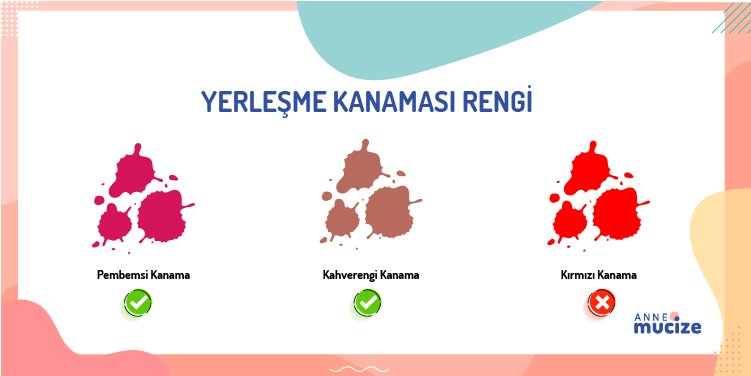
Light spotting can persist from a few hours to a few days and is completely normal. Bleeding is less than menstrual bleeding. The color of implantation bleeding is brown or pinkish.
How to Distinguish Implantation and Menstrual Bleeding?
The differences between implantation bleeding and menstrual bleeding are as follows:
- Implantation bleeding is less abundant than menstrual bleeding.
- The implantation bleeding is pale pink or brown. Menstrual bleeding, on the other hand, is dark red in color.
- While menstrual bleeding is more fluid, implantation bleeding is thicker and discharged.
- Menstrual bleeding can last for 7 – 10 days, while implantation bleeding can last from a few hours to 3 days.
- While menstrual bleeding occurs regularly, implantation occurs just before the upcoming menstrual date.
- While menstrual bleeding is dark brown at the beginning of menstruation, it turns red in the following days, the color is always the same in implantation bleeding.
Does Implantation Bleeding Cause Pain?
Pain during bleeding caused by the fertilized egg during implantation is not expected. Implantation bleeding does not cause sensations such as cramps and pain. Some women may experience a small amount of pain. This pain is not long-lasting.
Does Implantation Bleeding Happen to Everyone?
Spotting or bleeding during implantation is a sign of pregnancy seen in one out of every three women.