
Amniotic Fluid Leakage During Pregnancy
Amniotic fluid leakage during pregnancy is detrimental to your baby’s overall growth. Therefore, it is useful to know what amniotic fluid is and how to understand that it is leaking.
Pregnancy brings with it many changes in your body and especially in your uterus. The uterus prepares the right environment for the growing fetus and ensures that it receives all the nutrients it needs. An important component of this developmental process is the amniotic fluid. Amniotic fluid protects the baby, just like an airbag. It ensures that the uterus does not suffocate the baby by contracting tightly. The amniotic sac also protects your baby from infections by keeping germs away.
What Causes Amniotic Fluid Leakage?
Amniotic fluid is held together by the amniotic sac, which has two membranes known as the chorion and amnion. Amniotic fluid leakage is caused by a rupture that occurs in these injuries even though there is no birth.
How Much Should the Amniotic Fluid Level Be?
Its level rises and falls, as the fetus constantly uses amniotic fluid for its development. The level of amniotic fluid is highest at the 36th week of pregnancy. Normal levels of amniotic fluid by weeks are as follows:
- 12 weeks – 60 ml
- 16 weeks – 175 ml
- Week 36 to 38 – 400 to 1200 ml
After the 38th week, the level of amniotic fluid begins to decrease until birth.

What are the Causes of Amniotic Fluid Leakage?
The most common cause of amniotic fluid leakage is childbirth. But amniotic fluid can leak in the second trimester for many reasons.
- Childbirth – causes a spontaneous rupture of the membrane, which facilitates childbirth.
- Membran – erken membran rüptürü (amnios sıvı kesesinin doğumdan önce açılması) olarak bilinen 37. veya 38. hafta civarında da yırtılabilir. Bunun nedeni aşağıdakilerden biri olabilir:
- Infections in the vagina, cervix, or uterus
- History of surgery in the uterus or cervical region
- Tension in the amniotic membrane due to twin or multiple pregnancies or a large baby
- Malnutrition of the mother
- Alcohol, drugs or cigarette use in the prenatal period
- Bacterial infection
- Trauma to the amniotic sac due to accidents
- Abnormal development of the uterus
- Less amniotic fluid than it should be
Signs and symptoms
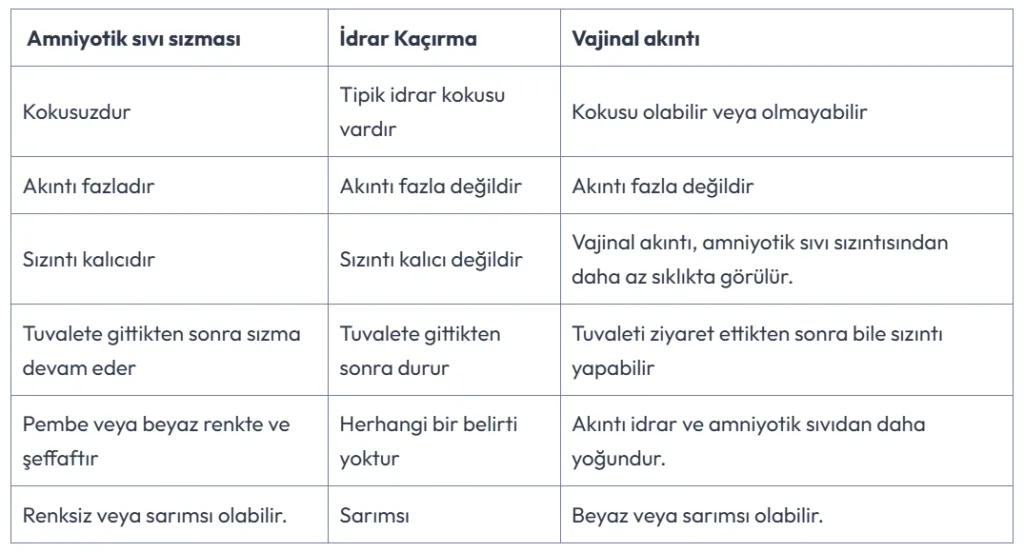
Vaginal discharge and urinary incontinence during pregnancy are quite frequent. You can distinguish amniotic fluid from other types of leakage with the help of this table.
Treatment of Amniotic Fluid Leakage

Treatment of amniotic fluid leakage depends on the stage of pregnancy. Your gynecologist will check if the leak is indeed amniotic fluid and then recommend an appropriate course of treatment. In the event that the baby is fully developed, you may also be advised to induce labor and deliver it.
Early Amniotic Fluid Leakage
If your water comes before your due date, you may have premature amniotic fluid leaking. If so, you will need to consult a doctor immediately to prevent any possibility of infection.
The fetus will be placed under observation, and the heartbeat and contractions of the fetus will be monitored. Treatment will be prescribed according to the stage of pregnancy.
Before 24 weeks: You will be closely monitored in the hospital when it is too early for a safe birth and there is a chance of miscarriage.
From 24 to 31 weeks: You will be given antibiotics to avoid an infection. Steroids may be injected to help the development of the baby’s lungs. If the leak stops and the baby is well, the birth is usually postponed until the 33rd week.
From Week 32 to 33. Week: The baby’s lungs will be monitored and checked for maturity. Steroids may be given to develop the baby’s lungs. Antibiotic treatment is prescribed to prevent infection, and then labor is triggered.
From week 34 to the date of birth: The baby is constantly monitored and given antibiotics to prevent infection. After the 34th week, the probability of delivery increases.
Low Amniotic Fluid Level
If the leak leads to low levels of amniotic fluid, the following treatments are considered.
Amnio-infusion : A catheter is used to insert amniotic fluid into the uterus. This procedure provides extra padding around the umbilical cord.
Hydration: You will be given serum or oral fluids to increase the level of amniotic fluid.
Complications
If amniotic fluid leakage is left untreated, it can lead to serious pregnancy complications. Some of the complications include:
- Amniotic fluid leakage in the first and second trimesters can result in miscarriage or stillbirth.
- It can cause developmental problems in your baby.
- You may be exposed to infection.
- Leakage of amniotic fluid may require premature and cesarean delivery.
- It can squeeze the umbilical cord or deprive your baby of oxygen.
What to do in case of amniotic fluid leakage
In case you experience a leak in amniotic fluid;
- You should inform your doctor immediately.
- You should keep track of when the leak started and the amount of the leak.
- You should not insert fingers or anything else into the vagina.
When Should You Call the Doctor?

Contact your doctor as soon as possible if:
- If you have not yet passed the 37th week and you suspect amniotic fluid leakage.
- If you have heavy amniotic fluid leakage and fever, with or without vaginal discharge.
- If the fluid has a greenish tint, it is an indication that meconium, which is the baby’s feces, has been mixed with the amniotic fluid.
- You have a permanent flow of amniotic fluid.
If you notice amniotic fluid leaking at 38 weeks, labor may have begun. If the leak happens earlier, it is best to consult your gynecologist for a diagnosis.