
What is Placenta Previa?
Placenta previa describes a condition in which the placenta partially or completely covers the mouth of the uterus during pregnancy. This can cause the placenta to come out first during childbirth, which can create risks for both mother and baby. Women with placenta previa are at risk of bleeding during childbirth.
There are three main types of placenta previa:
- Complete Placenta Previa: The placenta covers the entire cervix.
- Partial Placenta Previa: The placenta covers part of the cervix.
- Low-lying Placenta: The placenta is located close to the cervix but not directly above it.
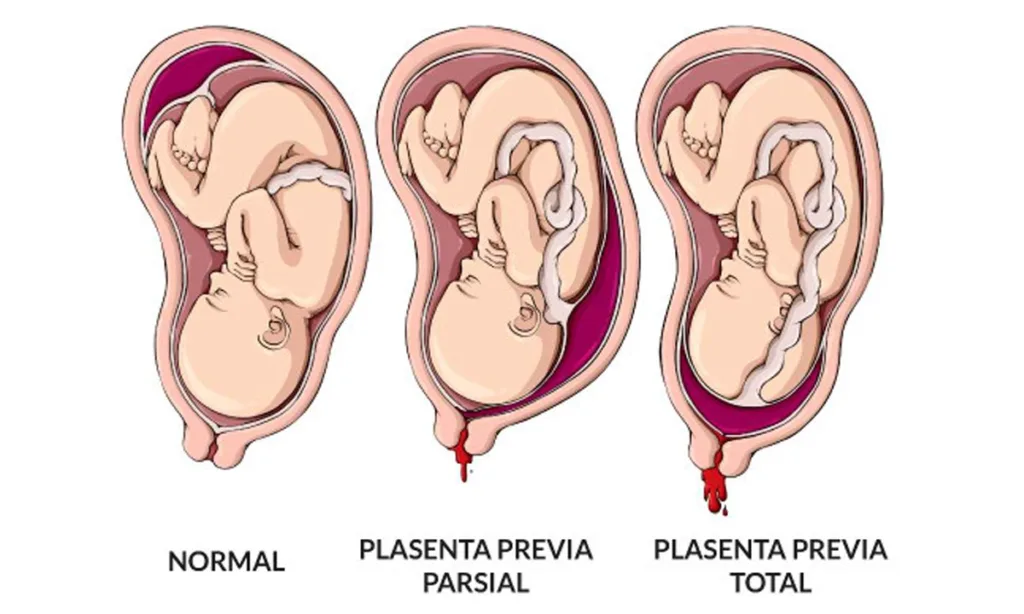
Incidence of Placenta Previa
Placenta previa occurs in about 0.5% of all pregnancies, but this rate may vary depending on the population and the sample size evaluated. That is, about one in every 200 pregnancies can have placenta previa. However, this rate may increase depending on some factors. For example:
- Women who have previously had a cesarean delivery are at higher risk, and this risk increases with each cesarean delivery.
- Women who have previously had uterine surgery (for example, fibroid surgery) may be at risk of placenta previa.
- Multiple pregnancies (twins , triplets, etc.) can increase the risk.
- Women who have previously been diagnosed with placenta previa are more likely to experience this condition again.
- Smoking and illicit drug use (especially cocaine) may increase the risk.
However, placenta previa can also occur in many women without any obvious risk factors. Therefore, every woman who experiences painless vaginal bleeding during pregnancy should contact her doctor and have an ultrasound examination to find out if placenta previa is present.
What are the symptoms of Placenta Previa?
Placenta previa can sometimes be asymptomatic and can usually be detected incidentally during a routine ultrasound examination. However, the most common and defining symptom is listed below:
- Painless Vaginal Bleeding: The most common symptom of placenta previa is painless bright red vaginal bleeding in the second or third trimester. Bleeding can range from mild to severe and may begin suddenly.
- Symptoms of Prematurity: Placenta previa can trigger preterm birth, so if other signs of preterm birth are also observed, the suspicion of placenta previa may increase.
- Baby Position Anomalies: The baby’s position in the uterus may be abnormal. For example, the baby may be in a butt-first (breech) position rather than in a pelvic (upside-down) position.
Symptoms usually appear later in pregnancy, especially in the third trimester. However, some women may not have any symptoms.
If any vaginal bleeding occurs, especially later in pregnancy, it is important to seek immediate medical attention. Apart from placenta previa, there are other causes of vaginal bleeding during pregnancy, and each of these causes may require special medical evaluation and treatment.
Conditions That Increase the Likelihood of Placenta Previa
There are many potential risk factors for the development of placenta previa. Here are some common risk factors:
- Previous Placenta Previa History: Women who have previously been diagnosed with placenta previa have a higher risk of experiencing this condition again.
- Cesarean Section Birth History: Women who have previously had a cesarean delivery have an increased risk of placenta previa. This risk may increase with each cesarean delivery.
- Surgical Interventions in the Uterus: Previous surgical interventions in the uterus, especially procedures such as myomectomy (removal of fibroids), can increase the risk of placenta previa.
- Age: Women over the age of 35 have a slightly higher risk of placenta previa.
- Multiple Pregnancy: Women carrying twins, triplets, or more have an increased risk of placenta previa.
- Previous Births: Women who have given birth five or more times have a higher risk of developing placenta previa.
- Smoking and Illicide Drug Use: Smoking and the use of certain drugs (especially cocaine) can increase the risk of placenta previa.
- Ethnicity: Some studies show that Asian women have a higher risk of developing placenta previa than other ethnic groups, but this link is not fully understood.
- Placental Anomalies: Conditions such as abnormal growth of the placenta, placenta accreta or placenta increta can increase the risk of placenta previa.
These risk factors may increase a woman’s likelihood of developing placenta previa, but they may not be an obvious risk factor for many women who develop the condition. Women who are at risk of placenta previa should be closely monitored throughout their pregnancy.
What are the complications of placenta previa?
Placenta previa can lead to some complications for both mother and baby. Here are some of these potential complications:
Complications for the mother:
- Bleeding: The most serious complication of placenta previa is severe bleeding. Bleeding usually occurs during or after childbirth and may require immediate medical attention.
- Cesarean delivery: Most women with placenta previa may need to have a cesarean section because during natural delivery, the placenta can block the pathway and cause severe bleeding.
- Placenta Accreta: This is a condition in which the placenta attaches abnormally to the uterus and is more common in women with placenta previa. Placenta accreta can cause severe postpartum bleeding and even hysterectomy (removal of the uterus).
- Postpartum hemorrhage: Placenta previa can also increase the risk of postpartum hemorrhage.
- Infection: In some cases, placenta previa can increase the risk of intrauterine infection.
Complications for the baby:
- Prematurity: Women with placenta previa have a higher risk of premature birth.
- Low birth weight: Due to prematurity or the placenta’s inability to provide adequate nutrition, the baby may be born with a low birth weight.
- Breech presentation: In women with placenta previa, babies are more likely to be in a breech position (buttocks or feet first).
- Perinatal death: Although rare, placenta previa can cause death in the baby.
- Respiratory distress syndrome: Babies born prematurely may have an increased risk of respiratory problems.
Women diagnosed with placenta previa should be closely monitored for these potential complications. Early diagnosis and proper medical care can reduce the risk of complications.
How Is Placenta Previa Diagnosed?
The diagnosis of placenta previa is usually made with the help of ultrasound. Details about the diagnostic methods are as follows:
- Ultrasound (USG): This is the most commonly used method in the diagnosis of placenta previa. Ultrasound shows the position of the placenta in the uterus. During routine second-trimester ultrasound scans, the position of the placenta is evaluated. If the placenta is near or above the lower segment of the uterus, the doctor may schedule another ultrasound at a later date because the placenta may move upward as the uterus grows.
- Transvaginal Ultrasound: If the position of the placenta cannot be determined precisely on standard external ultrasound, transvaginal ultrasound (a type of ultrasound performed by inserting an ultrasound probe into the vagina) can be used. This method can help determine the exact location of the placenta more precisely.
- Magnetic Resonance Imaging (MRI): Rarely, MRI may be used when ultrasound results are uncertain or supplementary information is required. MRI can provide more detailed information about the location and structure of the placenta.
If a woman has a suspicion of placenta previa, it is important to seek immediate medical attention, especially if she has vaginal bleeding. Vaginal bleeding can be a symptom of placenta previa as well as other complications, so it needs to be evaluated immediately.
How Is Placenta Previa Treated?
Treatment for placenta previa can vary depending on the severity of the condition, the duration of the pregnancy, the mother’s overall health, and other individual factors. The main goal in the management of placenta previa is to achieve the safest outcome for the mother and baby. Here are the possible treatment approaches:
- Observation and Follow-up: Active treatment may not be necessary for women with mild placenta previa who do not show any signs of bleeding. Instead, the doctor can closely monitor the mother’s condition. With the progression of pregnancy, the placenta may shift upwards and the problem may resolve itself.
- Bed Rest: In some cases, bed rest may be recommended to prevent bleeding or an increased risk of complications.
- Bleeding Control: In case of heavy bleeding, urgent intervention may be required. This can be accomplished with blood transfusions, intravenous fluids, or medications.
- Steroids: If there is a risk of preterm birth, the doctor may give the mother corticosteroid drugs to speed up the maturation of the baby’s lungs.
- Planned Cesarean Delivery: Cesarean delivery is recommended for many women with placenta previa. This is especially true when the placenta completely covers the cervix or when there is a high risk of bleeding during childbirth.
- Preterm Birth: If severe bleeding or other complications occur, premature delivery may be required if the baby can be born healthy.
If women are at risk of complications due to placenta previa, they may be advised to stay in the hospital until delivery. In such a situation, it is important to stay in close communication with the doctor and medical team.
What Can Be Done To Avoid Placenta Previa?
Placenta previa usually occurs without a definite cause. Therefore, it is difficult to offer a specific approach to prevent the development of placenta previa. However, now that some risk factors are known, it may be possible to limit the overall risk by reducing the effects of these factors:
- Reducing Smoking and Drug Use: Smoking and the use of certain drugs (e.g., cocaine) can increase the risk of placenta previa. Avoiding these habits can reduce the risk.
- Surgical Interventions: If possible, it is a good idea to avoid unnecessary surgical interventions on the uterus. However, some surgeries, especially the removal of fibroids, are medically necessary. When this type of surgery is needed, you should discuss the possible risks with your doctor.
- Previous Cesarean sections: Women who have previously had cesarean deliveries are at risk of placenta previa. However, if the cesarean section needs to be performed for a medical reason, you may have to accept this risk. However, women who choose cesarean section as a choice without a medical reason should consider this risk.
- Number of Children: Women who have given birth to five or more times may have an increased risk of placenta previa. However, many decisions to have children are an individual choice, and this risk should not be the only factor guiding your family planning decisions.
Frequently Asked Questions
What are the symptoms of placenta previa?
The most common symptom is painless, light red vaginal bleeding. However, bleeding may not occur in all women.
Can I give birth normally with placenta previa?
If the placenta completely or substantially covers the cervix, a cesarean section is usually the safest option.
Can I have sex if I have placenta previa?
In many cases, doctors advise women who have been diagnosed with placenta previa to avoid sexual intercourse, as it can increase the risk of vaginal bleeding. Uterine contractions can be triggered during sexual intercourse, which can initiate bleeding or worsen existing bleeding.
Can I exercise with placenta previa?
There are no strict rules about what exercises are appropriate for a woman with placenta previa. Instead, it is decided depending on the individual situation and the doctor’s recommendations. If you have been diagnosed with placenta previa and are planning to exercise, you should definitely consult with your doctor.