
Conditions to be considered during pregnancy
Most pregnancies go smoothly. However, sometimes there are situations that need to be considered during pregnancy. Various pregnancy complications can seriously affect both the mother and the baby. In this article, what are the conditions to be considered during pregnancy? What should be considered during pregnancy? We will try to answer important questions such as.
Going for regular checkups can help your doctor detect any common pregnancy complications early through lab tests and ultrasounds. You may also need to take medication or make certain lifestyle changes to reduce the risk of more serious complications down the road.
It is useful to know which serious medical problems are most likely to affect expectant mothers. We’ve put together a guide to the most common pregnancy complications.
Conditions to be considered during pregnancy

Miscarriage
It is among the conditions to be considered in low pregnancy. Miscarriage is the loss of pregnancy within the first 20 weeks. About 10 to 20 percent of known pregnancies end in miscarriage, and more than 80 percent of miscarriages occur before 12 weeks. Most first-trimester miscarriages are thought to be caused by chromosomal abnormalities in the fertilized egg that prevent the embryo from developing.
The first sign of miscarriage is vaginal spotting or bleeding. So if you notice spotting or bleeding, call your doctor right away (though it’s not uncommon to experience spotting or bleeding early in pregnancy, even if you’re not having a miscarriage). If your doctor thinks you’re having a miscarriage, he’ll order an ultrasound to see what’s going on in your uterus and possibly do a blood test.
To learn more about miscarriage, you can read our article on the symptoms and causes of miscarriage during pregnancy .
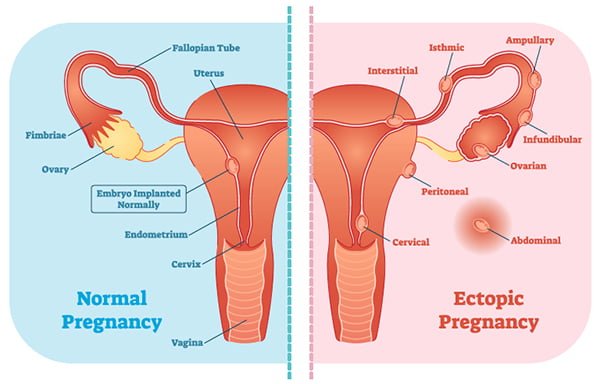
Ectopic pregnancy
When a fertilized egg implants outside the uterus, this is called an ectopic pregnancy. About 1 to 2 percent of pregnancies are ectopic. Because the vast majority of ectopic pregnancies occur in a fallopian tube, they are often referred to as “tubal” pregnancies.
It’s important to be aware of this type of pregnancy early because the growing embryo can rupture your fallopian tube and cause internal bleeding, which can be fatal. There is no way to transplant an ectopic pregnancy into the uterus, and the embryo cannot survive outside the placental region.
Diabetes
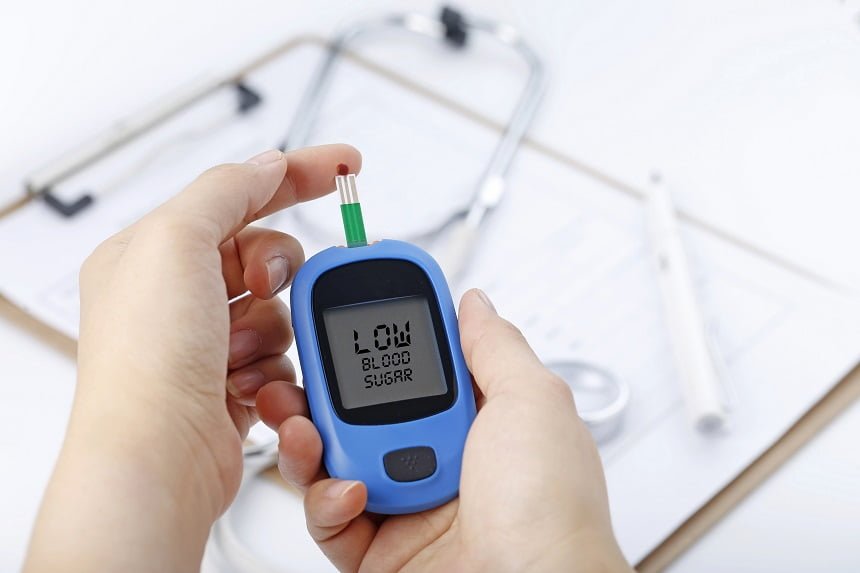
The rate of gestational diabetes is increasing in the world and in our country. This condition is common enough and serious enough. Pregnant women routinely have a glucose screening (Sugar loading test) between 24 and 28 weeks to test for this.
If you have gestational diabetes, you will be closely monitored by your healthcare provider. Most women can keep their blood sugar under control and give birth to healthy babies with diet and exercise , while others will need medications, most commonly insulin. Poorly controlled diabetes can have serious consequences for mother and baby.
For mothers with gestational diabetes, there is a 50 percent chance of developing type-2 diabetes later in life. However, this risk can be significantly reduced by maintaining a healthy weight and lifestyle. Normal-weight women have less than a 25 percent risk, while obese women have a 50 to 75 percent risk of developing type 2 diabetes after having gestational diabetes.
Preeclampsia and gestational hypertension
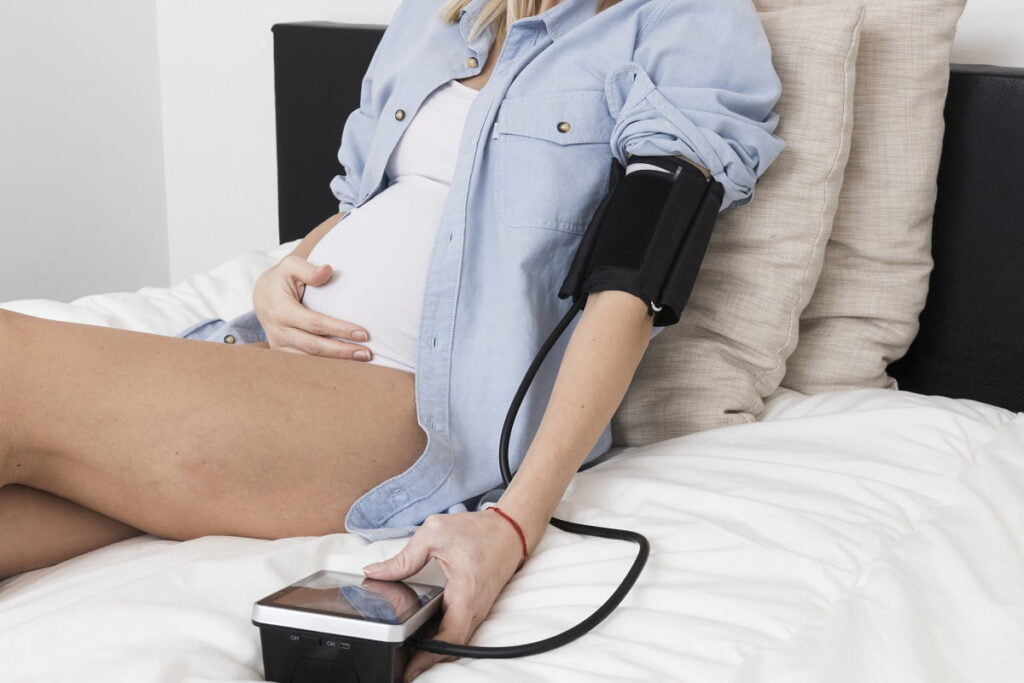
Preeclampsia and gestational hypertension are two types of high blood pressure that you can experience during pregnancy.
Preeclampsia is a serious condition that affects about 5 to 10 percent of pregnant women (the incidence is about twice as high in first pregnancies). If you have high blood pressure and protein in your urine after the 20th week of pregnancy, you will be diagnosed with preeclampsia.
Most expectant mothers with preeclampsia develop mild symptoms close to their due date, and with proper care, both they and their babies are doing well. However, it can progress rapidly, and severe preeclampsia can affect many organs, causing serious or even life-threatening problems. Women whose preeclampsia is severe or worsening need to give birth prematurely.
More than 4 percent of pregnant women in the United States develop gestational hypertension, and it is also more common in first pregnancies. If you develop high blood pressure after the 20th week of pregnancy, but there is no protein or other symptoms of preeclampsia in your urine, you are diagnosed with gestational hypertension.
To learn more about preeclampsia and gestational hypertension, you can read our article High blood pressure during pregnancy .
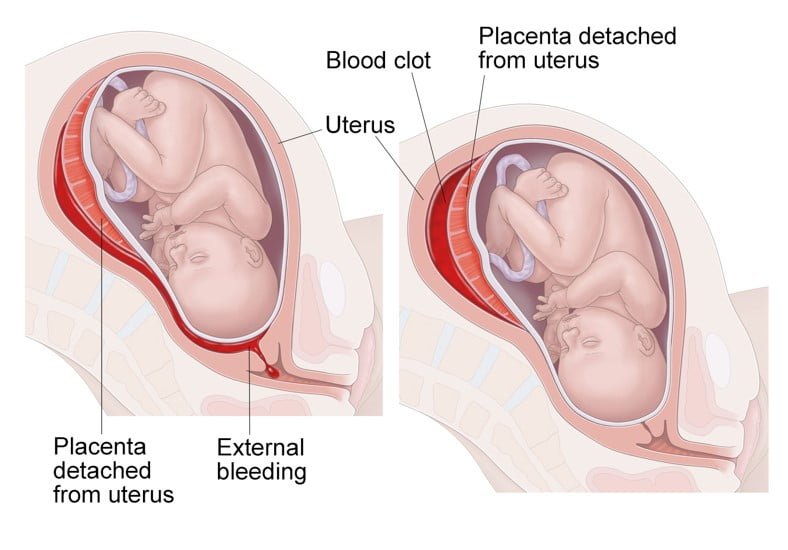
Placental abruption
The partial or complete separation of the baby’s partner part from the uterine wall before birth is called placental detachment. It can happen before or during childbirth and is dangerous for both you and your baby. Placental abruption occurs in about one in 100 pregnancies, most commonly in the third trimester, but can occur anytime after 20 weeks.
Depending on when the miscarriage occurred and how big it was, you may need to give birth by cesarean section right away if your baby isn’t getting enough oxygen.
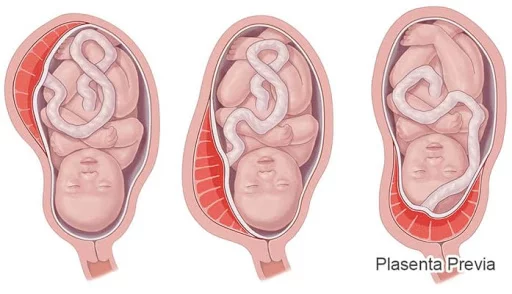
Placenta previa
When the baby’s placenta comes first and closes the birth tract and cervix, it is called placenta previa. Placenta previa is usually not a problem unless there is bleeding. However, if the placenta stays down as your pregnancy progresses, it can cause bleeding, which can lead to other complications and require you to give birth early.
Your mid-pregnancy ultrasound will check the location of your placenta, but only a small percentage of women who have placenta previa in mid-pregnancy have placenta previa when they deliver their baby. Placenta previa is present in up to 1 in 250 births. Women who have placenta previa when they give birth have to give birth by cesarean section.
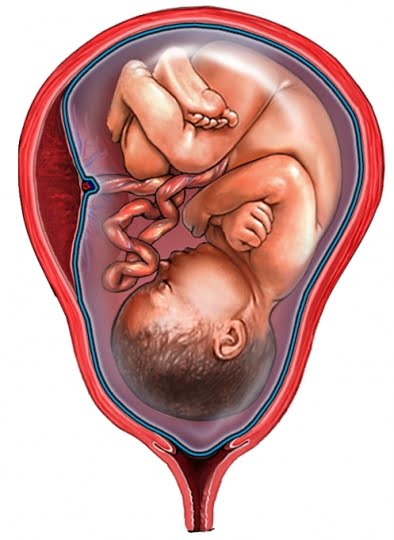
Low amniotic fluid (oligohydramnios)
The amniotic sac fills with fluid that protects and supports your developing baby. When there is too little liquid, it is called oligohydramnios. It can happen at any stage of pregnancy, but it is most common in pregnancies that reach term. About 40 percent of women between 41.5 and 11 weeks of gestation have very little amniotic fluid.
If you have a history of low amniotic fluid, your doctor will monitor your pregnancy closely to make sure your baby continues to grow normally. If the low amniotic fluid develops towards the end of pregnancy, your doctor will induce labor.
Depression
One in seven pregnant women suffers from depression, a mood disorder that can leave her feeling sad and hopeless for weeks or months. It is also common for women to develop the first signs of postpartum depression (PPD) during pregnancy.
Depression in pregnancy, if left untreated, is linked to premature birth and low birth weight. There are treatment options that are safe during pregnancy, including psychotherapy and/or medication. Be sure to seek help (and referrals as needed) from your medical provider.
Premature labor and delivery
If you start having regular contractions that cause your cervix to open (dilate) or thin (affect) before you reach 37 weeks of gestation, you are in preterm labor or premature labor. When a baby is born before 37 weeks, it is called preterm birth and the baby is considered premature . Out of every 100 children born in 2022, 15 were born prematurely.
Premature birth can cause health problems and can even be fatal for the baby if it happens too early. The more mature a child is when they are born, the more likely they are to survive and be healthy.