
What is a double screening test? When is it done?
The double screening test is an important test in terms of detecting the developmental abnormality of the baby in the mother’s womb. The baby’s Down Syndrome or different chromosomal genetic disorders can be detected with this test. In this test, some values are checked in the blood sample taken from the mother. At the same time, the growth and development of the baby is examined with ultrasound.
When is the Double Screening Test Performed?
The double screening test is performed at the end of the 1st trimester of pregnancy, at 11 – 14 weeks. For more accurate results, your doctor will determine the appropriate time for you. Tests performed after the 14th week are unlikely to give accurate results.
Why Is Dual Testing Done?
The double test is performed to detect the chromosomal abnormalities of the baby. It is determined whether the baby has hereditary diseases such as down syndrome.
How is the Double Screening Test Performed?
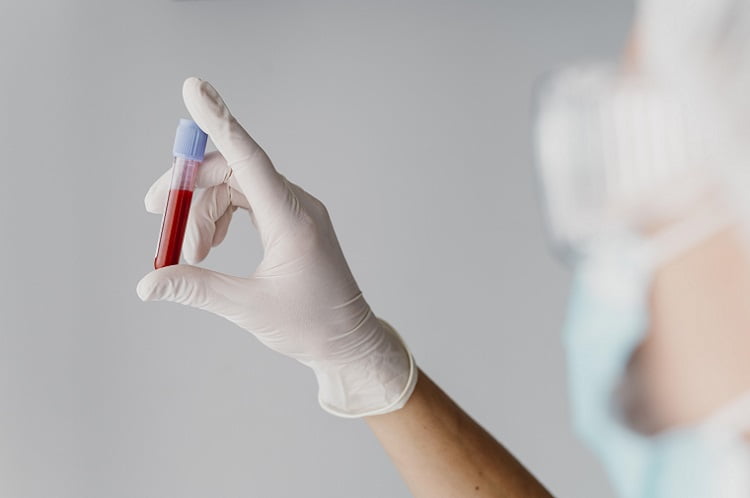
The double screening test consists of two stages. A blood sample taken from the mother is checked for pregnancy-related PAPP-A and beta-hCG levels.
With ultrasound, the nuchal translucency of the baby is measured, and the rate of birth of the baby with a hereditary disease is calculated by evaluating the findings obtained. If necessary, additional examinations can be performed.
How are Dual Test Results Evaluated?
If the beta-hCG value in the blood sample taken from the mother is high and the PAPP-A level is low, the baby is considered at high risk for genetic diseases. At the same time, if the baby’s nuchal translucency is higher than normal and the growth values are observed outside the normal in ultrasound examinations, it indicates that the baby is in the high-risk group. In addition, the presence of the baby’s nasal bone is also examined on ultrasound.
The age of the mother plays an important role in the detection of chromosomal diseases. For example, while the risk rate of a 25-year-old expectant mother is 1/60, the risk rate of a 40-year-old mother increases to 1/4.

NT nuchal translucency
In measurements made by ultrasound scanning, the baby’s nuchal thickness of more than 3 mm increases the risk rate. A normal baby should have a nuchal translucency of 2.5 mm.
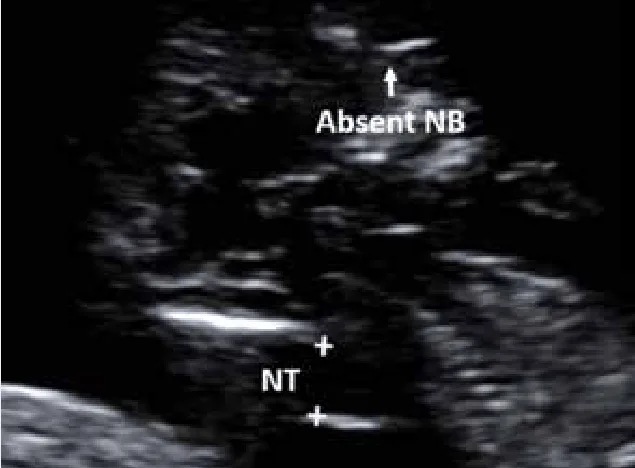
NB Nasal Bone
In this test, the presence or absence of the nasal bone is checked. If there is no nasal nasal bone, it increases the risk of the baby having trisomy , another hereditary disease. In the 11th to 14th weeks of pregnancy, the nasal bone is seen in 98% of babies. When viewed with ultrasound, the nasal bone is seen in the form of a line.
What should be the double screening test PAPP-A?
If the PAPP-A value in the blood test ;
- 1:10 to 1:250: High-risk and positive, (In this case, further examinations may be applied.)
- 1:1000 or more: Low risk and negative, (No action is taken, the baby continues to be monitored)
It is not changed as.
In the blood test, beta-hCG in normal pregnancies decreases over time as the pregnancy progresses. If the baby has a hereditary disease, this beta-hCG will be above normal levels.
Whether the baby has Down syndrome or not can be understood by chromosome counting by amniocentesis .
Who is the Double Screening Test Recommended For?
Although the double screening test is generally recommended for all expectant mothers, especially;
- Expectant mothers over the age of 35
- Expectant mothers who have had consanguineous marriages,
- Women with a family history of hereditary diseases,
- Expectant mothers with diabetes who use insulin,
- Expectant mothers who become pregnant with other methods such as IVF,
- Expectant mothers with a history of dead babies and miscarriages,
It is especially recommended.
Dual Screening Test Result Accuracy Rate?
The double test gives an average of 85 percent accurate results and there may be a 15 percent margin of error. Therefore, it cannot be said that the baby of an expectant mother in the high-risk group will definitely have Down syndrome . Likewise, expectant mothers who are in the low-risk group would definitely be very assertive in saying that they would give birth to a healthy baby.
Also Read: