Pregnancy Development Week by Week
Since you’re on this page, we assume you’re pregnant. Congratulations! With the development of pregnancy week by week , your body will undergo many changes in the nine months of your pregnancy. Yes, you get used to the idea of getting pregnant and becoming a mother, but the bodily changes that will occur in these nine months will prepare you for it. Pregnancy is an important life event. Perhaps it is a life-changing event. We’re sure you’re wondering what all the changes that occur in your body during this time will be. That’s why we’ve put together a weekly pregnancy guide that will give you an idea of the changes that will take place in your body.
Physical changes that occur during pregnancy
Physical changes that occur during pregnancy are the primary signs of telling if you are pregnant. You must have experienced the pregnancy symptoms that we mention below. But if you haven’t experienced these pregnancy symptoms yet, we recommend that you pay attention to these symptoms. These physical changes are clear signs of pregnancy!

- Delayed Menstruation – One of the most obvious signs of pregnancy is delayed menstruation. While it’s a tricky symptom for a woman with an irregular menstrual cycle, delayed menstruation can often indicate that you’re pregnant. If the projected amount of time has passed since your last period and your menstrual cycle has not yet begun, you are most likely pregnant.
- Tender and Swollen Breasts – Tender breasts accompanied by pain and mild discomfort are another symptom of pregnancy. The discomfort is caused by hormonal changes occurring in the body and gradually decreases over time.
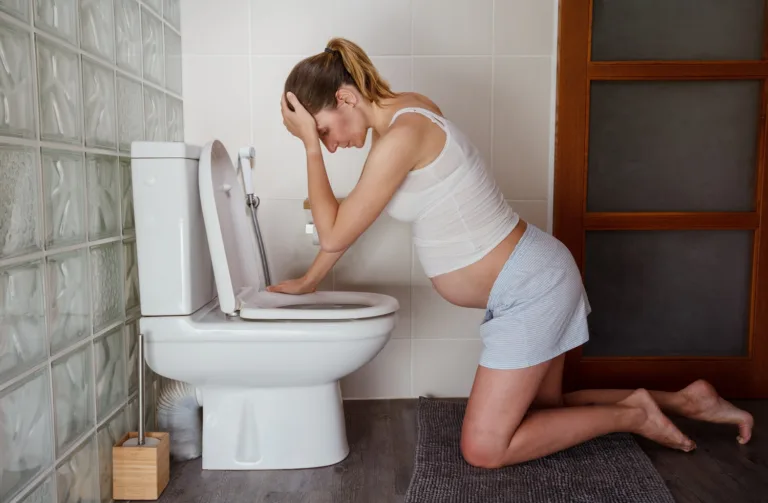
- Nausea – Nausea can strike at any time of the day and even at night. For pregnant women, nausea can begin as early as two weeks after conception. A pregnant woman may also have a heightened sense of smell.
- Frequent Urination – As the baby begins to grow in the womb, the pressure on the bladder and uterus increases. This leads to frequent trips to the bathroom.
- Increased Fatigue – A pregnant woman may also feel tired and dizzy. In the early stages of pregnancy, a woman may also faint due to low blood sugar.
- Shortness of breath – Shortness of breath is another common sign in pregnancy.
If you see one or more of the common symptoms mentioned above, you are most likely pregnant. However, these symptoms can also be a sign of different health problems. In this case, taking a home pregnancy test will give you information about whether you are pregnant or not.
Pregnancy development week by week
The due date of your baby is calculated based on the date of the last menstrual period. Within 40 weeks, your body will prepare the baby for birth. Now let’s take a look at what your body will experience during pregnancy week by week .
1st Week Pregnancy
When you’re 1 week pregnant, you’re not actually pregnant! Between the 1st and 2nd week, the sperm meets the egg and technically the pregnancy begins at that time. In the 1st week of pregnancy, either of the two ovaries matures and an egg is released. If both ovaries lay eggs, you will have fraternal twins. This is also the week you start taking prenatal vitamins . In this week, the maturing egg begins its journey into the fallopian tube. Moving down the fallopian tube, the egg waits for the sperm to arrive.
[ Also Read: Hamleliğin 1. Haftas i ]
2nd Week Pregnancy
Ovulation occurs in the 2nd week. Having sexual intercourse two or three days before the second week increases the chances of pregnancy. Breasts begin to grow as the glands produce estrogen and progesterone, these hormonal fluctuations cause sensitive breasts.
[ Also Read: 2nd Week of Pregnancy https://blog.mucizeanne.com/hamileligin-2-haftasi/7216/ ftası ]
3rd Week Pregnancy
Out of 250-300 million sperm, only one reaches the egg and fertilization occurs. Immediately after the lucky sperm that manages to cross the egg membrane enters, the egg membrane closes and does not allow other sperm to enter. But sometimes more than one sperm can get inside. In this case, you will have identical twins. DNA replication of sperm and egg begins. The coding of more than 200 genetic features such as the baby’s gender, eye color, hair color begins. The fertilized egg is called a zygote. Although it is still early for physical pregnancy changes, biological changes begin from this very moment.
[ Also Read: Hamileliğin 3. Haftası ]
4th Week Pregnancy
Bodily changes that occur in the first month of pregnancy begin to manifest themselves at this stage. Some bodily changes in early pregnancy include: swollen and sore breasts, fatigue, frequent urge to urinate, and nausea. This week, the formation of the placenta and umbilical cord begins, and the fertilized egg can enter the uterus. The zygote that settles in the uterus may cause some bleeding. This is known as implantation bleeding . Pregnancy tests performed in the first days of the delayed menstrual period may give false results. If you do not have your period within a few days, a new test will give more accurate results.
[ Also Read: Hamileliğin 4. Haftası ]
5th Week Pregnancy
The embryo begins to form and is the size of a poppy seed. From this week, the change and development of the brain, organs and blood vessels of the embryo takes place. A groove develops on the back of the baby that will later close itself to develop the neural tube that will later become the baby’s spinal cord.
[ Also Read: Hamileliğin 5. Haftası ]
6th Week Pregnancy
The neural tube becomes the spine, and the heart begins to pump more blood to the embryo. The C-shape of the embryo becomes more pronounced, and you may become more susceptible to nausea and fatigue. Your blood pressure may also decrease as a result of changes in hormone levels. The embryo is surrounded by a protective membrane and attached to the mother. Exercising helps you cope with stress and allows you to relax to some extent. During this period, pregnant women need to get enough folic acid. Folic Acid is very important for the growth of the spinal cord and brain of the fetus. Folic acid deficiency can cause serious birth defects, known as neural tube defects. The recommended dose for folate during pregnancy is 600 micrograms per day.
[ Also Read: Hamileliğin 6. Haftası ]
7th Week Pregnancy
Nausea increases its effect until this week. The embryo’s brain and face begin to take shape. The baby’s eye lenses develop, nostrils form, and the arms begin to take on a paddle-like shape. The mucus near the cervix thickens and closes the entrance to the uterus. Fingers and toes are formed and begin to show signs of brainwave activity in the embryo. You will experience mood swings, moodiness, and feel sick. This is a good sign as it indicates that your pregnancy hormones are in motion.
[ Also Read: Hamileliğin 7. Haftası ]
8th Week Pregnancy
The onset of brainwave activity in the embryo begins from the eighth week. When you stand up, you may feel a pain in the pelvic area. The doctor checks for signs of heartbeat or embryo activity through ultrasound imaging. When the existence of the embryo is confirmed, the chance of miscarriage decreases to 2%, and after that, your doctor will give you an estimated due date. You may experience bleeding in the first trimester of pregnancy.
[ Also Read: Hamileliğin 8. Haftası ]
9th Week Pregnancy
At 9 weeks, you may feel pressure in your bladder due to the further development of the embryo. This can cause you to leak urine. During this week, the baby’s heart and eyelids will develop. Hair follicles and nipples will also form. Your baby will no longer be called an embryo, but a fetus. 9th week of pregnancy It is a critical period for arm and leg development. Your baby’s liver, gallbladder, spleen, and adrenal glands are also starting to develop. As the baby’s respiratory system develops, he performs exercises with amniotic fluid. It can hold hiccups for diaphragm development. These hiccups are important in terms of strengthening the respiratory system. However, you will not be able to feel baby hiccups for a few more months. You may feel thirsty this week. According to most doctors, the most difficult week of pregnancy is considered to be the 9th week.
[ Also Read: Hamileliğin 9. Haftası ]
10th Week Pregnancy
By week 10, almost all of your baby’s vital organs will be fully developed and functioning. Your baby will now be called a ‘fetus’. The baby’s cartilage and bones will continue to form, and so will their genitals. The eyes of the fetus will become more prominent. The fetus will receive oxygen through the umbilical cords, and occasional respiratory movements may be noticed in the womb.
[ Also Read: Hamileliğin 10. Haftası ]
11th Week Pregnancy
At 11 weeks, the fetus can breathe, suck its thumb and sigh. The baby’s facial development continues during this time, and the head of the fetus is larger than its body. During pregnancy, cravings begin to increase from the 11th week. You may have cravings for some items that are not food. This is called pica syndrome . Folate intake should be continued regularly. Tests performed at the 11th week of pregnancy include: First trimester ultrasound scan. Nuchal translucency test (NT – nuchal screening test). It will also be performed between weeks 11 and 13 to test for chromosomal abnormalities.
[ Also Read: Hamileliğin 11. Haftası ]
12th Week Pregnancy
Your baby is about 5.6 cm tall and continues to grow rapidly. Your baby’s face will look more humanoid, and the baby weighs about 14 grams and is about the size of a plum. The rest of the body will continue to grow, and the growth rate of its head will slow down to adjust to the proportions of other body parts. The baby’s posture will turn into a curled and upright position. During this period, you may have difficulty defecating. You may also see signs of pregnancy, such as trouble with gas and bloating, and an increased heart rate. You may notice that your hips are expanding to accommodate your growing uterus. As the uterus has difficulty adapting to the pelvis, it puts pressure on the abdomen and pushes it into the abdomen to make room.
[ Also Read: Hamileliğin 12. Haftası ]
13th Week Pregnancy
You and your baby have made it through the first trimester. Congratulations! As you enter the second trimester of your pregnancy, the changes in your body will be in full swing. It is now very important to eat healthy and drink plenty of fluids. You will feel a little better as the nausea will decrease. In addition to low-impact yoga exercises, swimming exercises are often recommended for pregnant women at this stage. The baby will experience prenatal hiccups, which help clear the diaphragmatic passage and facilitate breathing function. Kidney function inside the baby begins, and the bone marrow begins to produce white blood cells to fight various diseases. The pancreas, gallbladder and thyroid will also have developed during this week.
[ Also Read: Hamileliğin 13. Haftası ]
14th Week Pregnancy
The baby’s organs will begin to work. With ultrasound scans, you will be able to see the baby’s facial features. The baby’s intestines will develop and insulin production will begin. You may experience your baby’s kicks for the first time. The baby’s kicks, also known as acceleration, are usually felt around 16-18 weeks, but the muscles of women who have given birth are more relaxed, and fetal movement for them can sometimes be felt as early as 14 weeks. The baby’s facial muscles develop. During this week, your doctor may recommend an ultrasound scan to check for neural tube defects in your baby, such as spina bifida and Edward’s syndrome.
[ Also Read: Hamileliğin 14. Haftası ]
15th Week Pregnancy
This week, blood proteins and screening tests for signs of Down syndrome or genetic defects are done. Baby girls make more mouth movements than baby boys. The fetus is the size of an orange. Its height is about 10.1 cm, and its weight is 70 grams. A visible swelling appears near the belly button. You may also experience Braxton-Hicks contractions in your abdomen. Remember that if you experience more than four contractions per hour and experience uncomfortable and frequent mucus discharge from the vagina, you should consult a doctor.
[ Also Read: Hamileliğin 15. Haftası ]
16th Week Pregnancy
With this week, a growth spurt begins. The baby’s bones begin to harden. For the rest of your pregnancy, you may find yourself gaining about 0.4 pounds per week. Your pelvic area will feel stiff and tight. You’ll also notice that your baby’s movements have become more pronounced by this time.
[ Also Read: Hamileliğin 16. Haftası ]
17th Week Pregnancy
You may have lucid dreams that are often bizarre. This reflects worries or worries about childbirth and parenting, which is completely normal. The baby will now be heavier than the placenta. Fat will accumulate in the baby’s body, which is responsible for the formation of heat. Your breasts will get bigger, more tender, and sometimes even sore. You’ll even experience the “pregnancy glow,” which is a sign of increased blood circulation in your face. Your baby’s first kicks are usually felt from this week to week 22. The placenta will now work fully.
[ Also Read: Hamileliğin 17. Haftası ]
18th Week Pregnancy
Further ultrasound tests may be done at this point to determine the sex of the baby. However, the doctor may not inform you about this. Fluttering kicks can be felt more, and the baby can react to certain sounds. The baby’s retina will develop and become sensitive to light. The baby can change positions and even cross his legs. Tooth formation and lubrication also begin. You may also feel pain in the legs, tailbone, and other muscles.
[ Also Read: Hamileliğin 18. Haftası ]
19th Week Pregnancy
Your baby in ultrasound scans; You can observe him holding the membrane of the amniotic sac, sucking his fingers or making movements in the uterus. If the baby is a girl, then from this week the formation of follicles in her body will begin, and half of her genetic material will be formed in her. Eat foods rich in B vitamins and healthy fats to support your baby’s brain development.
[ Also Read: 19th week of pregnancy Weekend ]
20th Week Pregnancy
Your uterus will grow towards the rib cage at a rate of 1 centimeter per week. You’re halfway through the pregnancy. With the relief of pregnancy symptoms, you will feel more comfortable and peaceful.
[ Also Read: Hamileliğin 20. Haftası ]
21st Week Pregnancy
If you are 35 years or older, your pregnancy carries some risks. If you have diabetes and other chronic conditions, you need to monitor her pregnancy carefully. Symptoms of being at risk of eclampsia begin to appear from the third trimester of pregnancy. To avoid these problems, you should take daily walks and relax.
[ Also Read: Hamileliğin 21. Haftası ]
22nd Week Pregnancy
You are in the fifth month of your pregnancy. At 22 weeks, your baby’s brain will develop rapidly and you may experience symptoms such as hemorrhoids or constipation. Yeast infections around the vagina and frequent vaginal discharge are common symptoms this week. When showering, reddish vaginal discharge, itching and bad odor can be seen. The baby’s organs are fully developed, and the blood circulating along the umbilical cord provides the fetus with oxygen and a number of other nutrients.
[ Also Read: 22 weeks into pregnancy Week ]
23rd Week Pregnancy
Your baby’s eyes will have formed by now but the color is not yet clear due to the lack of pigmentation. Your doctor can advise you on long-term travel this week.
[ Also Read: 23 weeks into pregnancy Week ]
24th Week Pregnancy
Your body will experience heartburn during this week. The symptom of heartburn is related to the hair growing on your baby’s head. If you don’t experience heartburn, your baby will likely be born without hair. Muscle aches, sore feet, fatigue, and dizziness are other pregnancy symptoms you may experience during this week.
[ Also Read: Hamileliğin 24. Haftası ]
25th Week Pregnancy
Exercise is essential from this point on to improve the healing process after childbirth. Your baby will have regular sleep cycles and his nostrils will open. The baby’s lungs will develop ‘surfactant’, which helps with swelling and keeps the small air sacs inside the lungs open for better breathing. You may experience back, hip and leg pain in the body. Fatigue and dizziness may reappear during this time.
[ Also Read: 25th week of pregnancy Weekend ]
26th Week Pregnancy
The baby’s hearing system will develop during this time and is sensitive to sounds. You will feel discomfort during your sleep. Sleep on your side instead of lying on your back because sleeping on your back blocks blood flow to the baby due to the fact that the uterus is located on the aorta. You may notice stretch marks forming near your abdomen.
[ Also Read: Hamileliğin 26. Haftası ]
27th Week Pregnancy
You are in the third trimester of your pregnancy and should be prepared to deal with back pain. During this time, you may feel severe back pain. You may experience shooting pain known as sciatica (unilateral back pain). Lifting, bending and walking worsens the pain and reduces the volume of amniotic fluid. When the baby moves, the tips of the toes and knees can be seen, or rather over your bony belly. Your heart rate may increase and you may feel red.
[ Also Read: Hamileliğin 27. Haftası ]
28th Week Pregnancy
At 28 weeks pregnant, you are in the last trimester of your pregnancy. During this period, you may feel contractions called Braxton-Hicks, which are the sensation of tightening of the muscles in the abdomen. The rate at which you gain weight will increase. The baby’s body fat percentage will increase to 2 to 3 percent. Standing for too long in hot weather can cause you to feel dizzy. You may also suffer from low blood pressure. Drink plenty of water and don’t go out too often if your pregnancy coincided with the summer months. Your belly will also get bigger, and this will make your body uncomfortable. During this time, there may also be leg cramps and pain.
[ Also Read: Hamileliğin 28. Haftası ]
29th Week Pregnancy
During the 29th week of pregnancy, it is common to go to the toilet frequently and take naps. Your baby’s respiratory system and organ functions will be fully developed by now and he won’t need any help breathing. During this period, Prolactin production increases and your breasts begin to secrete colostrum. The baby’s adrenal glands produce estriol.
[ Also Read: Hamileliğin 29. Haftası ]
30th Week Pregnancy
Your uterus will continue to grow and begin to fill your diaphragm. You may feel out of breath. Difficulty breathing and pressure on your bladder can cause you to urinate frequently. You must attend your childbirth courses and they should end around the 36th week.
[ Also Read: Hamileliğin 30. Haftası ]
31st Week Pregnancy
As your baby grows and your belly expands, the room in your womb will shrink. Ten kicks per hour indicate a healthy growth rate of the baby, and doctors assign women to follow the baby’s kicks. If you notice inactivity, drink a glass of fresh natural fruit or vegetable juice.
[ Also Read: Hamileliğin 31. Haftası ]
32nd Week Pregnancy
By this time, your baby’s five senses will be fully developed. Your baby will experience REM cycles during sleep and will prepare to go out into this world by concentrating breathing movements inside your uterus.
[ Also Read: Hamileliğin 32. Haftası ]
33rd Week Pregnancy
The baby’s position is upside down, indicating that he may be ready to make labor movements. This position also sends more blood to your brain, and you may experience more contractions in your abdomen.
[ Also Read: Hamileliğin 33. Haftası ]
34th Week Pregnancy
When light hits your container, the baby reacts. Your baby will sleep a lot in your womb during this week as his brain is constantly developing. The baby will also experience REM cycles more deeply during sleep and may also have dreams.
[ Also Read: Hamileliğin 34. Haftası ]
35th Week Pregnancy
The size of your baby, which is about 40.6 to 50.8 cm in size, indicates that it is ready for birth. The baby’s nervous and immune systems mature during this week, and your body feels the weight of your baby. You may need to take a break and sit down for short periods of time while walking around or doing normal daily tasks. For two weeks after the 35th week, you can take a test for the presence of Group B Streptococci, bacteria that live in the vagina and can pass infections to the baby. The test is usually done by taking a sample with a cotton swab with a light touch in the rectum.
[ Also Read: Hamileliğin 35. Haftası ]
36th Week Pregnancy
Your baby’s movements should now slow down and you should notice the baby’s movements about 20 times a day. If you are worried, you can drink a glass of orange juice and lie down on your side. This will help the baby wake up and move around for a while.
[ Also Read: Hamileliğin 36. Haftası ]
37th Week Pregnancy
The baby’s intestine will produce meconium. This will help with the first bowel movement when they come out of labor. The size of the baby will now be about 48.6cm and the baby will weigh between 2.7 and 3.1 kg. Your baby may also start breathing in anticipation of birth. Your breasts will drain the colostrum that will be your baby’s food source, and your belly will feel bloated.
[ Also Read: 37th Week of Pregnancy ]
38th Week Pregnancy
The lanugo, which is the hair on your baby’s body, will disappear during this time. Your baby will now be fully developed. However, connections will continue to form in the brain that will continue even after birth. Your baby’s nails can mature and reach the tips of his fingers and toes. Frequent bouts of back and neck pain are common. Decreased mobility is also common, and you will have a hard time with increased fatigue. Eat small but frequent healthy meals to get relief quickly.
[ Also Read: Hamileliğin 38. Haftası ]
39th Week Pregnancy
Your baby will now weigh between 2.7 and 4.5 kg. Your baby will continue to develop more neural connections and will experience hair growth and weight gain inside. You may want to consider taking maternity leave a few weeks before you enter the final week. Relax, go to a movie, and do hand-knee stretches along with pelvic bending exercises to relax.
[ Also Read: Hamileliğin 39. Haftası ]
40th Week Pregnancy
At 40 weeks, your baby will be ready to be born starting this week. If your baby hasn’t been born yet, or if you haven’t given birth this week, doctors will monitor you for another two weeks. Pregnancies close at this stage; But if it persists, they are referred to as ‘post-dated’. Your due date will soon be approaching and you will hold your baby in your arms.
[ Also Read: Hamileliğin 40. Haftası ]
41st Week Pregnancy
If your baby hasn’t been born yet, your doctor will talk about inducing labor. If the pregnant woman does not give birth until the 42nd week, it is considered unsafe for both the mother and the baby.
42nd Week of Pregnancy
If your baby hasn’t been born by now, your doctor will induce labor and recommend a cesarean section or vaginal delivery. If your cervix has not softened, your doctor will mechanically induce labor by administering hormones to mature the cervix for the birth of a baby. Processes such as peeling and rupture of membranes are used. Common methods of labor induction include the use of drugs such as oxytocin to induce vaginal contractions. If vaginal contractions do not occur despite the manual method of induction of labor, you will need a cesarean section procedure to deliver the baby.